
Case#628
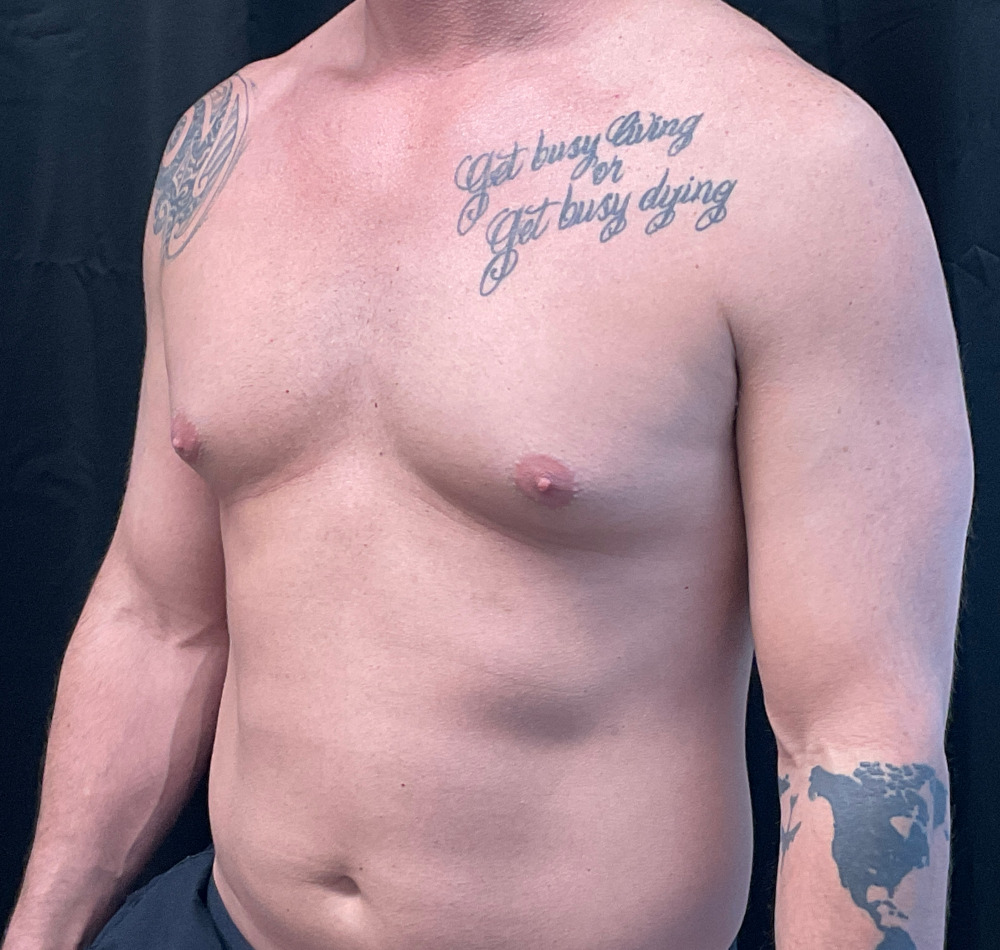
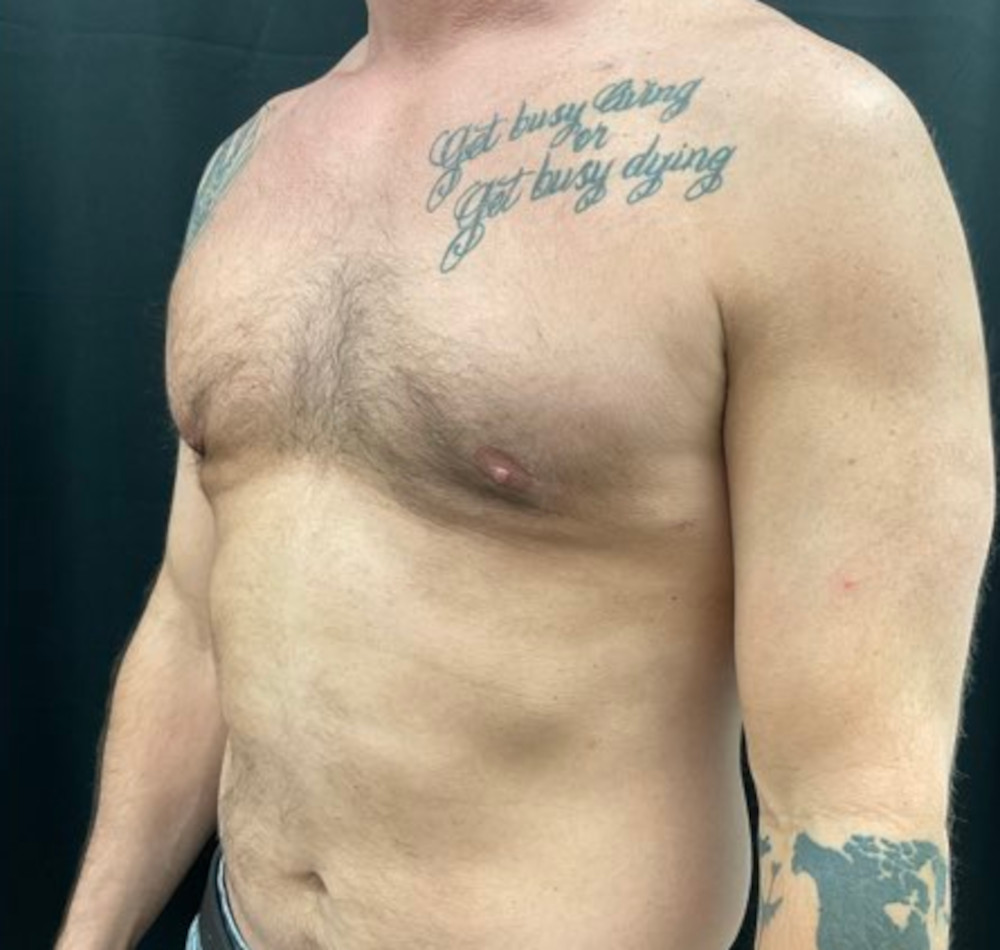
Sensitive Content
These before and after photos contain nudity. Please click/tap to view the images.
Enlarged male breast tissue, known medically as gynecomastia, can come from hormones, genetics, weight gain, or certain medications, and no amount of dieting or chest exercise fully removes it when glandular tissue is the cause. Male breast reduction removes the excess gland and fat and reshapes the chest into a more masculine contour. At Palm Beach Cosmetic Surgery, Dr. Michael Sistare will tell you honestly what is causing your chest fullness and which approach will actually fix it.

Male breast reduction, or gynecomastia surgery, flattens and reshapes an enlarged male chest by removing excess glandular tissue, fat, or both. Dr. Sistare matches the technique to the cause: surgical excision for glandular tissue, liposuction for fatty fullness, or a combination. It is an outpatient procedure done under general anesthesia and usually takes about two hours, and most men go home the same day. Recovery is generally smooth, with many men back to desk work within about a week and cleared for full activity, including chest workouts, around six weeks.
Results are typically long-lasting when the underlying cause is addressed. Significant weight gain, hormonal changes, or certain medications can bring the fullness back, so a stable, healthy lifestyle protects your result.
With male breast reduction, nearly every decision traces back to one question: what's behind the fullness? Your weight, your health history, and your age also play a part in how and when surgery makes sense.
What is actually causing your chest fullness. Gland, fat, or both. True gynecomastia is overgrown glandular tissue, usually hormonal, and it does not respond to diet or exercise. Pseudogynecomastia is excess fat, often tied to weight. The cause decides the technique, so this is the first thing Dr. Sistare works out.
Where your weight is. If fat is a big part of the picture, being at or near a stable target weight before surgery leads to a cleaner, longer-lasting result. Glandular tissue, on the other hand, will not shrink with weight loss and needs to be removed.
Whether the cause is managed. Ongoing hormonal issues or certain medications and supplements can bring gynecomastia back after surgery. Sorting out a manageable cause first helps your result last.
Your timing, if you are young. For teens, it is best to wait until chest development has stabilized, usually in the late teens or adulthood, so the result is not undone by ongoing changes.
These are the questions Dr. Sistare will ask during your consultation. Having early answers makes the visit more productive and the result more aligned with what you actually want.
Male breast reduction is an outpatient surgery, usually performed under general anesthesia so you are asleep and comfortable throughout, and it takes about two hours depending on the complexity. In select cases involving only small areas of fat, local anesthesia may be an option, and Dr. Sistare will recommend what is safest for you. After a short period of monitoring, you go home the same day.
If glandular tissue is the problem, Dr. Sistare removes it through a small incision along the curve of the areola, where the scar hides well, and repositions the nipple for a natural, masculine look if needed. If fat is the problem, liposuction through tiny incisions refines the contour. Many chests have both gland and fat, so the two techniques are often combined. Drains are sometimes used when a larger amount of tissue is removed, and Dr. Sistare will tell you at your consultation whether to expect them.
A male breast reduction really comes down to matching the technique to what is causing your chest fullness. The right approach depends on whether the problem is gland, fat, or both, not on any standard default.
Gynecomastia comes in two forms, and the type sets the technique:
| TYPE | WHAT IT IS | HOW IT IS USUALLY TREATED |
|---|---|---|
| True gynecomastia | Overgrown glandular breast tissue, usually hormonal, and it does not respond to diet or exercise | Surgical excision through a small incision at the areola |
| Pseudogynecomastia | Excess fat in the chest, often tied to weight gain or fluctuations | Liposuction through small, discreet incisions |
| A combination | Both gland and fat contribute to the fullness | Excision and liposuction together |
Dr. Sistare identifies which type you have and matches the technique to it, rather than defaulting to one method for every chest.
Dr. Sistare will recommend the combination that fits your chest during your consultation.
You may have heard of the pinch test, gently pinching the tissue under the nipple to guess whether firm gland or soft fat is behind the fullness. It can give a rough hint, but it is not a reliable way to diagnose yourself. An in-person evaluation is the only way to confirm the type, choose the technique, decide on anesthesia, and know whether drains are likely. That is what your consultation is for.
"The key with gynecomastia is matching the fix to the cause. Glandular tissue has to be removed; fat can be suctioned. Get that right, and the chest stays flat."
— DR. MICHAEL SISTARE

Free · 2 Minutes · No Commitment
Tap the areas that matter to you and our team turns your selections into a personalized plan before your consultation.
Private and secure. No obligation to book.
Male breast reduction works best when expectations match what it can do. It removes excess gland and fat and flattens the chest. It is not a substitute for weight loss or chest workouts, and it works best when any underlying cause is managed.
You are likely a good candidate if:
It may not be the right time if:
During your consultation, Dr. Sistare will evaluate your chest, identify the cause, and tell you honestly whether surgery, a change in habits, or a combination would serve you best. The goal is the right plan for the result you actually want.
Gynecomastia recovery is generally smooth, and most men are surprised at how manageable it is. It is still real surgery with real downtime, and recovery depends on how much was removed, but the timeline below is what most patients can expect.
Male breast reduction is a safe, well-established surgery when performed by a qualified surgeon. That said, it is a real operation and carries real risks you deserve to understand.
The two most important things within your control are choosing an experienced surgeon and following your aftercare exactly, including your compression vest and activity limits. Dr. Sistare will review every risk with you before your procedure.
Cost depends on the technique, whether excision, liposuction, or both are needed, and how much tissue is removed. Because the right approach varies from one man to the next, the most accurate number comes from a consultation rather than a generic figure.
At Palm Beach Cosmetic Surgery, male breast reduction generally starts around $8,500, with a customized quote provided at your consultation. Insurance may cover gynecomastia surgery when the condition is proven to be medically necessary and not caused by external factors such as medications or supplements, though most plans do not cover it when it is considered cosmetic. Financing is available through CareCredit, and your consultation will include a clear breakdown based on your specific plan, with no obligation to proceed.

Sensitive Content
These before and after photos contain nudity. Please click/tap to view the images.
Board certified by the American Board of Cosmetic Surgery and a Fellow of the American Academy of Cosmetic Surgery, Dr. Michael Sistare brings advanced cosmetic surgery training and a precise, artistic eye to every procedure. He learned the art of cosmetic surgery as a surgical fellow under Dr. Erik Nuveen before returning home to South Florida to practice. Dr. Sistare and his team take the time to assess your body, explain your options in detail, and let you arrive at the right decision yourself, without pressure.
Dr. Sistare is focused on helping you get the results you want at a price you can afford. What patients mention most often in their reviews is the experience itself: a surgeon and team who listen, explain thoroughly, and are genuinely available.
