The Quick answer
Palm Beach Cosmetic Surgery cuts through the confusing facelift labels, explaining that names like mini, SMAS, deep plane, and Smartlift mostly refer to a handful of real techniques distinguished by how deep the lift goes and how much of the face and neck it covers. A deep plane and a SMAS facelift both look natural, but the deep plane approach generally lasts longer and suits more severe drooping, while a less extensive lift fits earlier, milder sagging. Surgical recovery is fairly comparable across techniques, with most people back to their routine in about three weeks. Cost varies with the technique, combined procedures, and your surgeon's experience, so the right choice comes down to your anatomy, main concern, and tolerance for downtime, best sorted out in person with Dr. Michael Sistare.
Start researching a facelift and the single word quickly splinters into a dozen: mini, SMAS, deep plane, full, liquid, Smartlift, even a "weekend" lift. Each name claims to be the right one for your face, and the more you read, the harder they are to tell apart.
The hard part isn’t deciding you want a change. It’s sorting through those labels to find the one that actually fits your face and your goals.
Facelifts are seeing a significant increase in popularity. In 2024, they ranked as the sixth-most common cosmetic surgery procedure in the U.S., according to ASPS. If you're thinking about getting one, you're not alone. Statistics show many are considering it. However, with numerous options available, it's easy to become confused, and many people find themselves unsure of how to proceed.
At Palm Beach Cosmetic Surgery in West Palm Beach, FL, board-certified cosmetic surgeon* Dr. Michael Sistare personalizes each procedure to your facial features, not to popular trends. This guide provides a side-by-side comparison of the main facelift types, highlighting what each addresses and the differences in recovery time and cost, to help you determine the best option for you.
Here's some good news! Once you understand what truly sets these procedures apart, making a choice becomes much easier.
Key takeaways
- Facelift names frequently refer to the same core techniques. The real differences lie in the depth of the lift and the extent of the face and neck covered, rather than the marketing terms.
- A deep plane facelift and a SMAS facelift both look natural. A deep plane facelift is generally expected to last longer and is better suited to more severe drooping, while a less extensive lift is better suited to earlier, milder sagging.
- Surgical recovery is fairly comparable across the main techniques, with most people back to their routine in about three weeks. Light walking can begin the night you get home.
- Cost varies based on the technique, combined procedures, and your surgeon's experience. A personalized consultation quote provides much more accurate information than the average online estimate.
- The right choice comes down to your facial anatomy, your main concern, and your tolerance for downtime, which is best sorted out in person with a qualified surgeon.
What are the main types of facelifts you can compare?
Most of the names you've come across represent just a handful of real techniques, mostly distinguished by how deep the lift goes and the area it covers. Once you're familiar with these categories, it gets less overwhelming.
A facelift, known medically as a rhytidectomy, lifts and repositions the tissues of the lower face and neck. It also removes some excess skin, resulting in features that appear firmer and more rested.
The main difference between these techniques is the layer they focus on. Some are designed to smooth out the skin's surface, giving a softer look, while others target the deeper support layer to improve structure from beneath. This variety allows for tailored approaches depending on specific needs.
Here's a side-by-side look at the options people compare most often.
| Facelift type | What it lifts | Incision and reach | Often best for |
|---|---|---|---|
| Minimal incision facelift (Smartlift) | Lower face and upper neck | Shorter incision, limited area | Earlier, milder sagging |
| SMAS facelift | The deeper muscle and connective-tissue layer (the SMAS) | Standard incision around the ears | Moderate jowls and lower-face laxity |
| Deep plane facelift | The deeper tissue layer, released and repositioned | Standard incision, deeper lift | Heavier drooping and midface descent |
| Full (traditional) facelift | Lower face, often with the neck | Longer incision, broader area | Comprehensive, longer-lasting change |
| Liquid facelift (nonsurgical) | Surface volume only, with filler | No incision, injectable | Mild lift when skin is still firm |
The deeper techniques are where the real differences show. A SMAS facelift involves tightening and repositioning the SMAS (superficial musculoaponeurotic system) layer beneath the skin, which is responsible for sagging and jowls. A deep plane facelift takes this further by releasing and lifting that layer as a single unit, resulting in a more natural-looking outcome rather than an overly tight one.
The less extensive option, often called a "mini facelift," is more precisely a minimal-incision facelift. It focuses on the lower face and the upper neck through a smaller incision. That makes it a lighter procedure for the right candidate, not a watered-down version of a full lift.
Nonsurgical "facelifts," such as liquid facelifts, use dermal fillers to restore facial volume. They provide a slight lift primarily when your skin remains relatively firm.
Quick "20-minute" or "weekend" lifts are similar. They may ease initial changes but cannot replicate the extent or long-lasting effects of a surgical facelift. Understanding which option suits you best is the key first step to making a confident decision.
How do facelift techniques differ in what they can fix?

The most effective technique is the one suited to the particular issues you are experiencing, which is why this question is more important than the specific name. Different lifts are designed to address different concerns.
For early jowling and mild skin laxity, a minimal incision facelift can be an effective option. Dr. Sistare performs this procedure, which he calls a Smartlift. The main difference from a full facelift is the area it addresses and the shorter incision.
When the issue is more complex, the strategy shifts. Here's how typical objectives often align with the methods:
- Sagging cheeks and midface descent respond best to a deep-plane facelift, which lifts the deeper tissues as a unit so the cheek sits higher again.
- For more pronounced jowling, a heavier, more dramatic lift usually favors the deep-plane approach over SMAS, since releasing that layer yields a longer-lasting lift.
- Jawline definition and lower-face aging are at the core of what a SMAS or deep-plane lift restores.
- A neck lift treats loose neck skin and the vertical "bands" causing a "turkey neck" by tightening neck muscles and removing excess skin and fat.
One thing surprises many people. Most facelifts include some neck lifting as well, because the face and neck age together and rarely look balanced when only one is treated. A lift is seldom done entirely on its own.
The upper face follows a similar approach. If crow's feet or hooded lids are present, combining your lift with eyelid surgery or a brow lift ensures a more balanced outcome rather than an incomplete appearance. If you're uncertain about which combination suits your needs, contact our team for an honest discussion about your options.
How do facelifts compare in terms of recovery, downtime, and scarring?
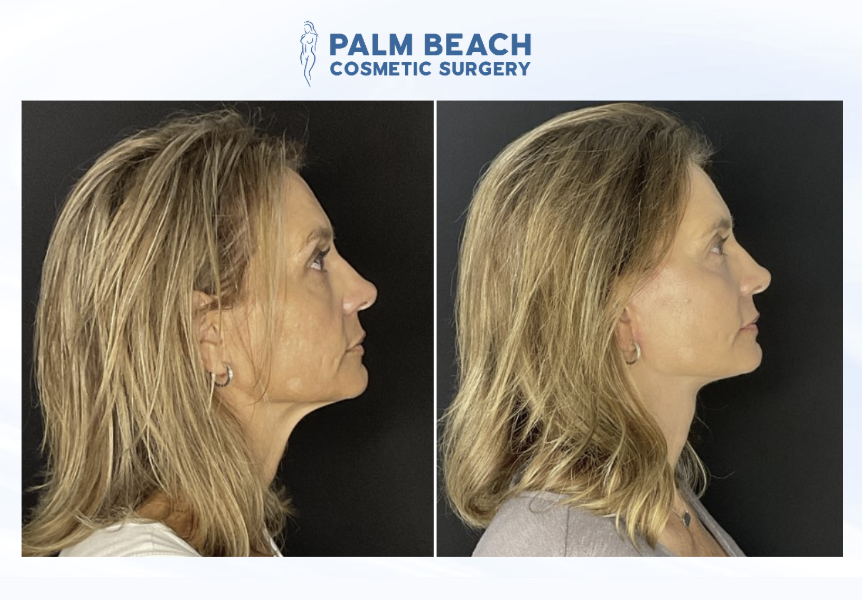
Recovery tends to be more comparable across different surgical techniques than across marketing claims. The label "less invasive" does not necessarily imply a significantly easier healing process.
For both a deep plane and an SMAS facelift, expect about two and a half to three and a half weeks before you can resume most of your routine. A minimal incision lift may have a slightly shorter recovery, but the overall timeframe is similar.
It’s useful to observe how the weeks generally progress, as most people follow a steady, foreseeable pattern.
| Timeline | What to expect |
|---|---|
| Week 1 | Peak swelling, with light walks starting the night you get home |
| Week 2 | Lighter activity as bruising fades |
| Week 3 | Many people feel ready to return to work |
| Week 4 | Activity steadily increases |
| Week 5 | Resuming most normal routines |
| Week 6 | Approaching full recovery |
People often worry most about the pain aspect, but it's usually the most unexpected positive part. Discomfort following a facelift is generally mild and can be managed initially with over-the-counter medications as part of a non-opioid pain management plan.
Movement is important early on, so light walking begins the night you arrive home. Elevating your head slightly, about 15 degrees, even during sleep in the first two weeks, helps reduce swelling more quickly.
The other major concern is scarring, but modern methods keep it to a minimum. Incisions are made along the hairline, near the ears, and occasionally beneath the chin, where they tend to fade effectively over time.
A minimal incision lift results in a smaller scar compared to a full face and neck lift. The deeper SMAS and deep plane methods also employ similar, discreet incisions with dissolvable sutures that do not require follow-up removal.
Many patients are surprised by the extensive support they receive after surgery. Dr. Sistare provides his personal cell number and remains accessible throughout recovery, offering a level of concierge service that most practices don't provide. Careful research into recovery is the right approach, as understanding what is normal helps make the process feel much less intimidating.
Sharon, a patient at our West Palm Beach office who had face and neck surgery, shared:
"He called me later that night after the surgery to check up on me. That was very impressive. The post-opt experience was very good. He answered all my questions and was very patient, caring and kind. A week after my surgery, my face and neck looked significantly better. It boosted my confidence and brought me great joy."
How do facelift types compare on cost and how long results last?
Cost and longevity are essentially the same question, as the value of a facelift depends on what you pay versus how long it lasts. These two factors are more closely linked than most price comparisons suggest.
A few factors shape what any facelift costs:
- The technique itself, since a deeper or broader lift requires more surgical time than a minimal-incision approach.
- Whether you combine procedures, such as adding a neck lift or eyelid surgery in the same session.
- Your surgeon's training and experience with advanced techniques.
- Where the practice is located, which affects pricing across the board.
Since your specific plan greatly influences costs, online "average" figures often don't match what you'll actually pay. Also, because a facelift is elective, insurance won't cover it. The only accurate cost estimate is a personalized quote given during a consultation.
To keep the cost manageable, you can explore financing options with Cherry, CareCredit, and Alphaeon Credit, which allow you to divide the cost into monthly payments.
Longevity distinguishes these techniques. A surgical facelift typically maintains its results for about 10 years or longer, with a deep-plane lift usually lasting longer than an SMAS lift. A neck lift often lasts between 10 and 15 years, whereas a liquid facelift's effects are measured in months.
Over time, a more comprehensive lift can provide greater value despite a higher initial cost, as it doesn't need to be repeated as frequently. Using sun protection and good skincare preserves the results of any technique.
How do you know which facelift is right for you?
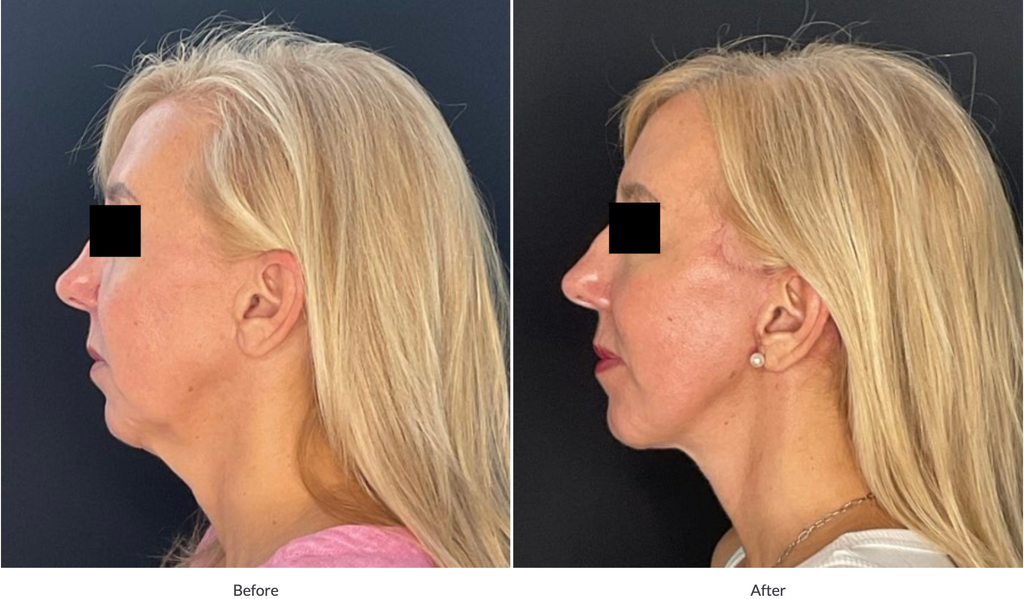
Choosing the right facelift depends on three factors: your facial anatomy, your primary concern, and your available downtime. It's more important to match these with a suitable technique than to select a procedure based on its name.
Interestingly, age isn't the main factor. Instead, the choice is based on reversible facial changes, such as jowling and the reduction of fat pads that once maintained full cheeks.
Here's a common situation many people experience: if lifting your cheeks slightly in the mirror helps you achieve the look you want, a facelift might be beneficial. Keep in mind that skin quality and overall health are important, and if you smoke, quitting well in advance of surgery can promote better healing.
It’s also important to remember that the skill of the surgeon is just as crucial as the type of facelift itself. An experienced surgeon can make a technique look beautifully natural, while someone less experienced might create a tighter-looking result. That's why the consultation is such a key part of the process, helping ensure you get the best possible outcome.
Consider a consultation as a mutual assessment. It's Dr. Sistare's opportunity to examine your anatomy firsthand, as well as your chance to determine if he's the suitable provider for you.
At the West Palm Beach office, an in-person visit allows a hands-on assessment that a screen can't replicate. From there, you'll have an honest conversation about your goals and a plan tailored to your face.
Feel free to ask any questions. No need to hold back. Taking your time to choose thoughtfully, rather than just following what’s trending, is the best way to make great decisions.
Deborah, a patient at our West Palm Beach office who chose her procedure after researching results, shared:
"I am above and beyond happy with the smartlift facial surgery and necklift surgery I recently had done by Dr. Sistare. After seeing many of his patients results, I decided to have my surgery done by Dr. Sistare."
Conclusion
Remember those overwhelming terms you started with? You've reached this point, which means the once vague idea of a facelift is now starting to become clear to you. The right facelift is not about what’s trending, but more about the technique that best suits your facial anatomy and the look you want to achieve.
To get started, browse authentic before-and-after results in the face & neck lift gallery and look at cases that match your starting point. When you're feeling ready to move forward, scheduling a personal consultation with Dr. Sistare is a wonderful next step. During this visit, you'll receive personalized answers tailored specifically to your face, and there's never any pressure to make a decision right then and there.
At Palm Beach Cosmetic Surgery in West Palm Beach, FL, we’re dedicated to helping you achieve natural-looking results that fit your budget. Your path to feeling more confident should be exciting and approachable, not overwhelming. Reach out to us to schedule a consultation, or call us at 561-499-9000. We’re here to help you take the first step!
Frequently asked questions
Is a deep plane facelift better than a SMAS facelift?
Neither option is universally "better," and both can appear very natural. A deep plane facelift typically lasts longer and is better suited for more pronounced drooping and jowling, whereas a SMAS facelift is well-suited for moderate laxity. The best choice depends on your anatomy and personal goals.
Which facelift looks the most natural?
A successful surgical facelift should appear invigorated rather than unnaturally pulled, as it involves repositioning the deeper tissue layer rather than just tightening the skin. Both SMAS and deep plane methods aim for natural outcomes. The surgeon's expertise is equally important as the chosen technique.
Which facelift lasts the longest?
A surgical facelift typically lasts about 10 years or more, with deep-plane lifts generally lasting longer than less extensive approaches. Nonsurgical "liquid" facelifts last only months by comparison. Sun protection and good skincare help maintain results.
How much downtime does a facelift usually require?
Most people plan to return to work about two and a half to three and a half weeks before resuming their routine, with many back at work around week three. Swelling peaks in the first week and eases after that. Light walking starts the night you get home.
Can a facelift improve my jawline and jowls?
Yes, restoring the jawline and softening the jowls is exactly what a SMAS or deep-plane facelift is designed to do. By repositioning the deeper tissue that has sagged, the lower face looks firmer and more defined. Many patients add a neck lift for a fully balanced result.
Do I need a neck lift with my facelift?
Usually, yes. Most facelifts incorporate some neck lifting, since the face and neck age simultaneously; treating only one often leads to an unbalanced appearance. Your surgeon will advise during your consultation if your neck also requires attention.
What age is best for a facelift?
There's no one perfect age for everyone, as what truly matters are the specific changes in your face. Your decision should be guided by concerns that can be improved, such as jowling and volume loss, as well as your skin quality and overall health. Some people may feel ready in their forties, while others might prefer to wait a bit longer.
How do I know if I'm a better candidate for a deep plane versus a minimal incision facelift?
It comes down to how much lift you need. A minimal incision approach suits earlier, milder sagging of the lower face and upper neck, while a deep-plane lift is designed for more pronounced drooping and midface descent. A hands-on evaluation is the only reliable way to know which fits you.
Can I combine a facelift with eyelid surgery or fat grafting?
It's common to combine procedures, and doing so can result in a beautifully harmonious outcome. Eyelid surgery offers a refreshing lift to the upper face, while fat grafting helps to restore natural volume in areas like the cheeks. Your surgeon can work with you to plan a single, well-coordinated procedure that's perfectly aligned with your personal goals.
How much does a facelift cost?
The cost varies based on the technique used, whether procedures are combined, and your surgeon's experience. That's why obtaining a personalized quote during a consultation provides the most accurate estimate. Convenient financing options are available through Cherry, CareCredit, and Alphaeon Credit, making it easier to manage payments with monthly plans.
*Disclaimer: The specialty recognition identified herein has been received from a private organization not affiliated with or recognized by the Florida Board of Medicine. This content is for educational purposes only and does not constitute medical advice. A consultation with a qualified board-certified surgeon is required to determine the best treatment plan for your individual needs and any questions you may have about a medical condition or procedure.