You've decided a facelift might be the right next step. The before-and-after photos look incredible. The deeper question, the one that quietly keeps you up at night, is what the days in between actually look like.
How sore will you feel? When will the bruising fade? When can you go to dinner without people staring?
Recovery is the part most patients underestimate, and the part that, once you understand it, makes everything else feel manageable. According to the American Society of Plastic Surgeons (ASPS), 79,058 facelifts were performed in the US in 2024. And globally, the ISAPS reported 737,028 facelift procedures worldwide in 2024, a 7.4% increase over the previous year. Most of those patients went home the same day and rebuilt their normal life in steady, predictable steps.
At Palm Beach Cosmetic Surgery in West Palm Beach, FL, board-certified cosmetic surgeon Dr. Michael Sistare* walks every facelift patient through this exact roadmap before surgery. This article walks you through what to expect during the first 72 hours, weeks one and two, the one-month mark, and the path to your final results.
Key takeaways
A few things that tend to surprise people most about facelift recovery:
- Most facelifts are outpatient. You go home the same day with a caregiver, a supportive head wrap, and clear instructions for the first night.
- Swelling and bruising typically reach their peak around days 3 to 4, then begin to noticeably improve by the end of the first week, with most soreness easing as well.
- Around the two-to-three-week mark, many patients return to desk work and feel comfortable concealing residual bruising with makeup.
- One month in, swelling has dropped substantially and you can usually resume moderate exercise once your surgeon clears you.
- Final results take three to six months to fully reveal as deeper tissues settle, with scars continuing to fade for a year or more.
- Following post-op instructions, sleeping with your head elevated, and avoiding nicotine are the biggest controllable factors in how smoothly you heal.
What should you expect in the first 72 hours after your facelift?
The first three days are the steepest part of the curve, both physically and emotionally. Swelling and bruising peak around days 3 to 4, and your face will feel tight, full, and a little foreign in the mirror. That's completely normal, your body is responding exactly the way it's supposed to.
Most surgical face lift procedures at our office are done as outpatient surgeries, meaning you go home the same day with a trusted caregiver. You'll have a supportive bandage or compression wrap in place to help control swelling and keep you comfortable. We'll also have you up and taking gentle steps the very night of your surgery — gentle, early walking from day one supports circulation and lowers your risk of complications. Some surgeons place small drains behind the ears to remove excess fluid, these tiny tubes are usually taken out within a day or two at your first follow-up visit.
Pain in the first 72 hours is typically described as moderate, more of a pressure and tightness than sharp pain. Think of it less like a stabbing sensation and more like the feeling after a hard workout on muscles you haven't used in a while. Most patients describe recovery as mildly to moderately uncomfortable rather than painful, and pain is usually controlled with over-the-counter medication first. At our practice, Dr. Sistare uses a customized, non-opioid pain regimen designed to minimize side effects and speed recovery, so any stronger prescription medication is typically needed for only about three days, if at all.
A few things that matter most during this window:
- Sleep on your back with your head elevated about 15 degrees, ideally in a recliner or with several pillows, this reduces blood pooling around the face and helps swelling go down faster.
- Apply cool (not icy) compresses on and off as instructed to ease swelling and bruising.
- Avoid bending, lifting, straining, or anything that raises your blood pressure.
- Skip aspirin, ibuprofen, and herbal supplements that thin the blood unless your surgeon clears them.
- Keep meals soft and stay well hydrated to help your body heal.
If anything feels off, sudden one-sided swelling, escalating pain, or unusual bleeding, call your surgeon's office right away. The first 72 hours are when hematomas (a collection of blood under the skin, think of it like a deep bruise forming a pocket) are most likely to appear. They are treatable when caught early. Dr. Sistare walks every patient through what's normal versus what warrants a call before they leave the surgery center, so you're never left guessing.
To talk through how that first night and the first 72 hours would look for you, schedule a consultation at our office.
How does week one of facelift recovery progress?
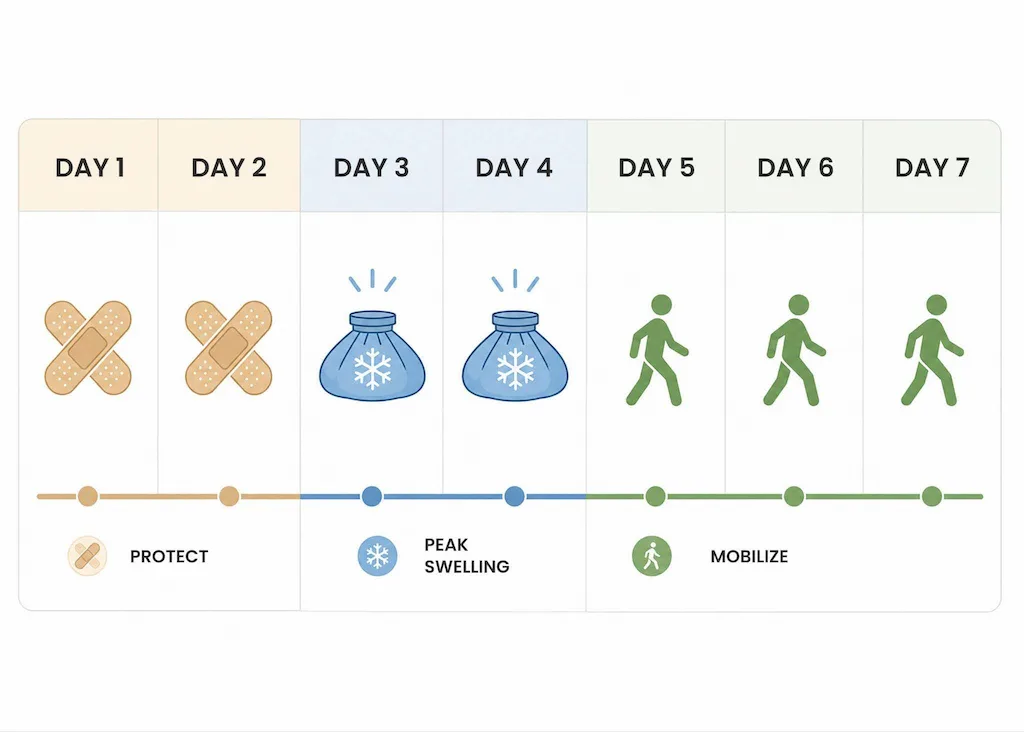
Week one is often described as the turning point. Swelling typically peaks around days 3 to 4 and starts meaningfully subsiding by the end of the week, and most of the soreness improves in the first few days. You'll still look puffy and bruised, but you'll feel noticeably more like yourself by the weekend.
Your first follow-up usually happens within the first few days. Dr. Sistare will check how your healing is progressing, remove drains if you have them. The sutures Dr. Sistare uses are fully dissolvable, so there are no stitches to remove — they absorb on their own as you heal. Bruising often starts to migrate downward as gravity pulls it toward the neck and chest, this can look dramatic for a day or two, but it fades.
Light walking around the house starts almost immediately, and short, easy strolls outside are usually fine within the first few days. Showering depends on your surgeon's specific instructions, often around day two or three, but you'll want to avoid getting incision lines wet until cleared. Numbness and tightness across the cheeks, jaw, and neck are normal and tend to ease gradually as the nerves wake back up. "Numbness" just means those areas may feel less sensitive or have a slight tingling sensation, this is a temporary part of healing.
Grant, S., a Palm Beach Cosmetic Surgery patient who had face and neck surgery, shared her experience:
"Dr. Michael Sistare did surgery for my neck & face and I was very pleased with his expertise during my surgery. He called me later that night after the surgery to check up on me. That was very impressive. The post-opt experience was very good. He answered all my questions and was very patient, caring and kind. A week after my surgery, my face and neck looked significantly better. It boosted my confidence and brought me great joy."
By the end of week one, the worst of the visible recovery is usually behind you. Most patients have transitioned to over-the-counter pain relief, sleeping more comfortably, and starting to picture week two without dread. Browse our facelift before and after gallery to see how real patients look at each stage of recovery.
What can you expect during week two of face lift recovery?
Swelling and bruising typically peak within the first 48 hours and gradually improve over the next 10 to 14 days, with ongoing changes in appearance during the first two weeks of recovery.Many patients are surprised at how quickly the mirror starts to feel like home again.
This is around when many desk-job workers feel ready to head back to work. Many patients feel confident enough by the two-to-three-week mark to return to the office or attend social events without anyone suspecting they had surgery. Your personal timeline will depend on the type of work you do, how quickly your body heals, and how comfortable you feel being seen during recovery.
Makeup is generally allowed once incision lines are sealed and your surgeon gives the green light, often somewhere between day 7 and day 14. Gentle, mineral-based concealers can make a real difference at this stage if you have appointments or events you don't want to cancel.
Easy walking continues, and most patients can drive again within a few days of surgery, once they're off any stronger pain medication. Incisions tucked behind the ears and along the hairline will still look pink, but they're healing right on schedule. Mild asymmetry (meaning one side may look slightly different from the other) in swelling is normal and resolves over the next several weeks as the tissues settle.
How does recovery look at the one-month mark?
A month after surgery, most patients describe feeling like themselves again. Visible swelling has dropped to a small amount that mostly you notice. Your jawline looks tighter, your cheeks feel firmer, and the contour you saw in the mirror right after surgery starts to look refined rather than puffed.
Moderate exercise typically resumes in weeks three to four with surgeon clearance, starting with cardio and progressing to strength training. Most patients take one to two weeks off work and daily activities initially, but strenuous physical activity should still be avoided for a few more weeks. Numbness across the cheeks and ears is improving but may linger for several months as nerves continue to recover. Tightness eases the most in this window.
Here's what reintroducing activity tends to look like at this stage:
- Brisk walking and light cardio: usually cleared in weeks 3 to 4
- Yoga, Pilates, and low-weight strength training: gradual return around the one-month mark
- Heavy lifting and high-intensity training: typically held until weeks 6 to 8
- Saunas, hot tubs, and pools: cleared once incisions are fully sealed and your surgeon approves
- Sun exposure on incisions: avoid direct sun; protect with mineral SPF and a wide-brimmed hat when you're outside
This is also when scars start to mature and fade. Incisions are typically well-hidden along the hairline, around the ears, and sometimes under the chin. They fade significantly with consistent sun protection and gentle scar care.
The deep plane facelift technique, which repositions the deeper layers of tissue rather than just tightening the skin on the surface, is part of why patients tend to see a smoother, more rested appearance as the one-month swelling resolves. Think of it like pulling a fitted sheet tighter from underneath rather than just stretching the top layer. When sagging is concentrated lower down, pairing the lift with neck contouring refines the jawline and the area beneath the chin in the same session.
S Teague, a face and neck patient at our West Palm Beach office, summed it up:
"Dr Sistare preformed a face, neck, upper bleph and CO2 laser. I could not be happier with results! His bed side manner is impeccable, and he is always responsive!!"
By the end of month one, the daily reminders of surgery have mostly faded. The reminders that stick around are the good ones, a smoother jawline, a softer transition into the neck, and a face that feels like a fresher version of you.

When will you see your final facelift results?
Patients notice meaningful improvements within three weeks as swelling subsides, but final results typically develop over several months as deeper tissues settle. Most surgeons describe the three-to-six-month window as when the result you'll live with really comes into focus, and scars continue maturing for 12 months or more.
Residual swelling, especially around the jawline and beneath the chin, can persist subtly into months two and three. Most people around you won't notice it. But you will, because you're the one looking. Sensation continues to return gradually, and any lingering tightness softens as the deeper tissues settle into their new position.
Follow-up appointments are typically spread across the first year. Facelift results from a deep plane technique can last 10 years or more when paired with healthy lifestyle habits. The factors that meaningfully extend your results are largely within your control:
- Daily sun protection (SPF 30 or higher, wide-brimmed hats outdoors)
- Avoiding nicotine, which damages collagen and accelerates skin aging
- Maintaining a steady weight, since significant fluctuations affect facial volume
- A consistent skincare routine focused on moisture, retinoids, and antioxidants
- Annual touch-ups with non-surgical anti-aging solutions if desired
Cassell, D., a Palm Beach Cosmetic Surgery patient who had a smartlift facial and necklift, shared her experience:
"I am above and beyond happy with the smartlift facial surgery and necklift surgery I recently had done by Dr. Sistare. After seeing many of his patients' results, I decided to have my surgery done with Dr. Sistare."
The reward for the patience of the early months is a result that doesn't shout "I had work done." It looks like you, refreshed.
What factors influence how quickly you heal?
Recovery isn't one-size-fits-all. Two patients who have the same procedure on the same day can heal on noticeably different timelines, and the reasons usually come down to a mix of biology and behavior.
Age and overall health set the baseline. Age over 65 has been identified as a significant factor that can affect wound healing, along with other factors such as comorbidities and overall health. Chronic conditions like diabetes or autoimmune disease can slow healing and need to be carefully managed before and after surgery. Nutrition, hydration, and sleep all affect how quickly tissues repair.
The type of facelift also matters, and how a facelift works, step by step breaks down how each technique is actually performed. Here's a quick comparison between a mini facelift and a deep plane facelift:
| Factor | Mini facelift | Deep plane facelift |
|---|---|---|
| Incisions | Shorter, around ears | Longer, hairline to behind ears |
| Tissue layer treated | Surface skin and SMAS (the muscle layer just under the skin) | Deeper tissue plane released and repositioned |
| Typical downtime | 1 to 2 weeks | 2 to 3 weeks |
| Best for | Mild to moderate sagging | More significant aging, deeper jowls |
| Result longevity | Around 5 to 7 years | 10 years or more |
Smoking is the single biggest controllable risk factor. Smokers face higher surgical risks and poorer healing outcomes because nicotine constricts blood vessels and meaningfully raises the chance of poor healing and visible scarring. Most surgeons require complete cessation for at least six weeks before and after surgery.
Sleep position matters more than people expect. Sleeping on your back with your head elevated for the first few weeks reduces swelling, protects incisions, and speeds visible recovery. Following post-op instructions to the letter, even when you start feeling better and want to push the timeline, makes a real difference.
Tips that consistently help: stay hydrated, eat protein-rich meals, take short walks early to support circulation, and resist the urge to compare your healing to someone else's. Your timeline is yours.
What should you expect during your consultation?

Choosing a facelift is as much about choosing a surgeon as choosing a procedure. Your consultation is the place to evaluate both. Seeing how a board-certified cosmetic surgeon in Palm Beach approaches that first conversation tells you a lot about the care you'll get through recovery.
A consultation at our office isn't just a chance for your surgeon to evaluate you, it's equally your chance to evaluate him. He reviews your skin quality, bone structure, and aging patterns in person, then walks through which technique would best match your goals. You'll discuss your timeline, your downtime constraints, your concerns about scarring, and the questions you've been collecting.
In-person really does matter. A hands-on assessment lets your surgeon evaluate skin laxity (meaning how much the skin sags or loosens) and underlying tissue in a way a screen simply can't replicate. It also lets you see the office, meet the team, and get a feel for whether this is a place you'd be comfortable healing in.
To help make your goals more accessible, we offer flexible financing through Cherry, CareCredit, and Alphaeon Credit, so you can choose a payment plan that fits your budget. Cost transparency is part of how we work. You'll leave the consultation with a clear sense of what your facelift would involve financially.
There's no pressure to commit. Reach out to us when you're ready, or call 561-462-4469 to schedule.
Conclusion
The questions that kept you up at night, how sore, how swollen, how visible, all have answers, and most of them are gentler than you feared. The recovery weeks pass in steady steps, and the version of you who comes out the other side has done something thoughtful for herself.
Browsing real patient photos that match your starting point is one of the most helpful next steps you can take, and a personal consultation fills in the details that photos can't show. Take a look at our facelift before and after gallery whenever you're ready.
When you're ready to take that step, Dr. Sistare and our team are here to help you map your own recovery, with affordability, transparency, and concierge-level care woven through every visit. Book your consultation or call 561-499-9000 to begin your journey to confidence.
Frequently asked questions
When can I return to work after a facelift?
Most patients with desk jobs return to work around the two-to-three-week mark, when bruising can be covered with makeup and you feel comfortable being seen. Jobs requiring heavy lifting or being out in the sun usually need an extra week or two. Your surgeon will give you a personalized timeline at your follow-up.
How long does swelling last after facelift surgery?
Swelling peaks around days three to four and meaningfully decreases by the end of week one. Most visible swelling is gone by four to six weeks. The last bit of subtle swelling, especially around the jawline, can take three to six months to fully resolve.
Can I exercise after my facelift and when?
Light walking is encouraged from the first few days to support circulation. Brisk walking and easy cardio usually resume around weeks three to four. Heavy lifting or high-intensity workouts wait until six to eight weeks with surgeon clearance.
How long do I wear compression garments or bandages?
A supportive head wrap is typically worn continuously for the first few days, after which Dr. Sistare generally recommends a compression garment for about six weeks to support healing and keep swelling down. Drains, if used, are usually removed within a day or two at your first follow-up.
Is numbness normal after facelift and how long?
Yes, some numbness across the cheeks, jaw, and ears is completely normal and part of how nerves respond to surgery. Most numbness improves over the first few months. Subtle sensation changes can linger for six to twelve months as nerves fully recover.
When will facelift scars fade?
Incisions are placed in discreet locations along the hairline, around the ears, and sometimes under the chin. They look pink for the first several weeks, soften by three to six months, and continue fading for a year or more with consistent sun protection.
How should I sleep after a facelift?
Sleep on your back with your head elevated about 15 degrees for the first one to two weeks, ideally in a recliner or with a wedge pillow. This minimizes swelling, protects incisions, and makes mornings noticeably more comfortable.
Does smoking affect facelift recovery?
Yes, significantly. Nicotine constricts blood vessels and meaningfully raises the risk of poor healing and visible scarring along incisions. Most surgeons require complete cessation for at least six weeks before and after surgery.
Can I wear makeup during recovery?
Most patients can apply gentle, mineral-based makeup once incision lines are sealed, often around day seven to fourteen, with surgeon approval. Use clean brushes, avoid pulling on healing skin, and keep products well away from active incisions until they're fully closed.
How long until I see final facelift results?
You'll see meaningful improvement within three weeks as swelling subsides. Final results take three to six months as deeper tissues settle, with scars continuing to fade for a year or more.
**Disclaimer: The information is intended for educational purposes only and should not be considered medical advice. Every patient's anatomy, health history, and goals are unique, and outcomes, recovery timelines, and candidacy may vary. The only way to determine whether the procedure is right for you is through a one-on-one consultation with a board-certified cosmetic surgeon. Always discuss your specific concerns, risks, and expectations with your provider before making any decisions about surgery. The specialty recognition identified herein has been received from a private organization not affiliated with or recognized by the Florida Board of Medicine."