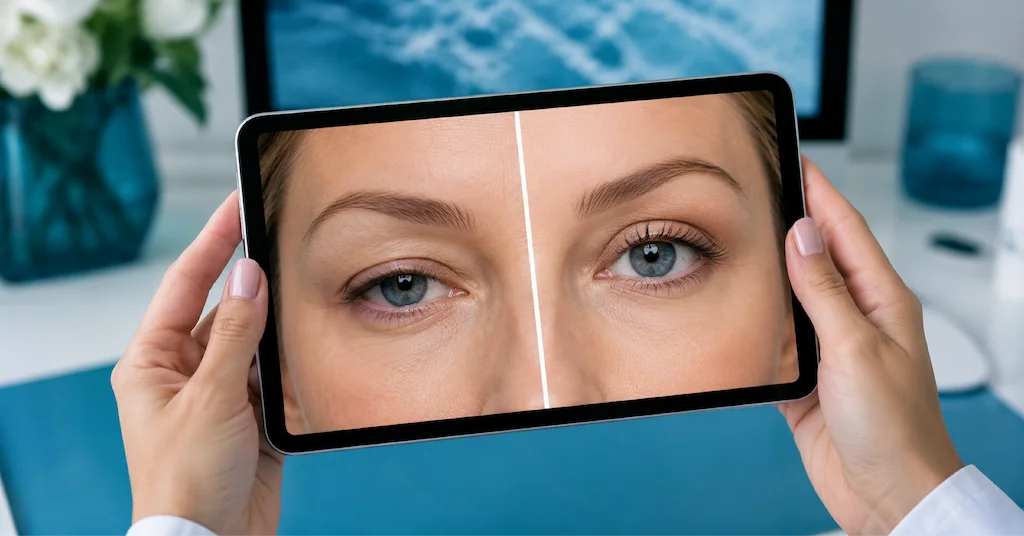
You've tried the caffeine eye creams, the cold spoons, the extra hours of sleep, and maybe a roller that lives in your fridge. The puffiness under your eyes hasn't read the memo. It's still there in every photo, making you look tired on days you feel fine.
Here's the part most products won't tell you. True under-eye bags usually aren't a skincare problem at all. They come from small pads of fat that shift forward as the support tissue around the eye loosens with age. No cream can move fat back into place.
That's exactly the gap lower blepharoplasty is designed to close. Also called lower eyelid surgery or simply "lower bleph," it removes or repositions the fat that creates bags and smooths the loose skin that creams can't tighten. Eyelid surgery rose more than 72 percent worldwide over the four years through 2024, according to ISAPS.
Choosing the right approach matters, because under-eye concerns come from different sources and no two faces age the same way. That's the philosophy at Palm Beach Cosmetic Surgery in West Palm Beach, FL, where a board-certified cosmetic surgeon*, Dr Sistare, matches the technique to your anatomy rather than offering a one-size-fits-all fix. This guide walks through who's a good candidate, the surgical techniques, what the procedure and recovery actually involve, the real risks, and what it costs. Much of a good outcome comes down to choosing the right cosmetic surgeon who tailors the approach to your face.
Key takeaways
- Under-eye bags are usually caused by fat shifting forward as support tissue loosens, which is why creams and home remedies can't fix them and surgery can.
- Lower blepharoplasty is tailored to your anatomy. Some patients need fat repositioned, others need a small amount of skin removed, and many need a combination.
- The procedure is outpatient and takes about an hour, with most people back to work and daily life within one to two weeks.
- Serious complications are uncommon, and choosing a board-certified surgeon who handles fat conservatively is the single biggest factor in a natural, low-risk result.
Am I a good candidate for lower blepharoplasty?
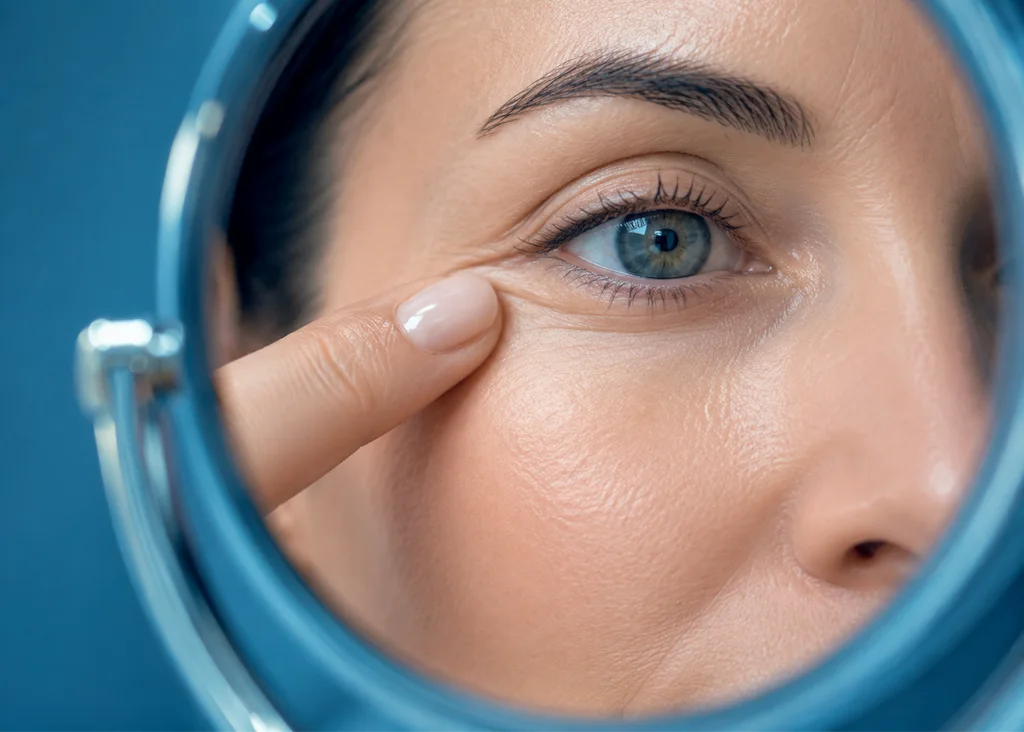
The best candidates are people bothered by puffiness, under-eye bags, or loose, crepey skin that persists no matter how rested they are. If shadows and bulges show up in photos before they show up in your energy levels, you're the kind of patient this surgery was built for.
The first thing to sort out is where your concern actually comes from, because the under-eye area can age in three different ways:
- Bulging fat that creates a puffy "bag," usually the main target of surgery
- Excess or wrinkled skin along the lower lid
- A hollow, sunken groove where the lid meets the cheek, known as a tear trough
Most people show a mix of all three, and the right plan depends on which one dominates. One important limit: lower eyelid surgery smooths bags and loose skin, but it won't erase dark circles from pigmentation or crow's feet. Knowing what the surgery can and can't do is part of being happy with your result. Seeing it in real cases helps too, and how to read a blepharoplasty before and after shows what realistic results actually look like.
Age matters less than you might think. Most lower eyelid surgery patients are between 40 and 70, though younger people sometimes pursue it for hereditary bags that have nothing to do with aging. What matters more is your overall health and a few specific conditions, since glaucoma, dry eye syndrome, diabetes, thyroid disorders, or uncontrolled high blood pressure can affect your candidacy.
A thorough medical history is exactly why this starts with an in-person evaluation, where Dr. Michael Sistare reviews your health and looks closely at your lower lids.
Good preparation also improves your odds of a smooth recovery. If you smoke, plan to stop at least six weeks before surgery, since smoking slows healing. Avoid aspirin and anti-inflammatory medicines like ibuprofen for two weeks beforehand to limit bruising. Researching this carefully is exactly the right approach. If you're not sure which concern describes you, the clearest answer comes from an in-person look, so reach out to our team for a candid conversation.
What are the surgical techniques for lower eyelid surgery?
There isn't one "lower bleph." There's a family of techniques, and your surgeon chooses among them based on whether your main issue is fat, skin, hollowing, or some blend of the three. Here's how the most common approaches compare.
| Technique | How it works | Best suited for |
|---|---|---|
| Transconjunctival | Incision made inside the lower lid, leaving no visible external scar | Bulging fat with little excess skin |
| Subciliary (skin-muscle) | Incision just below the lash line to access fat and trim loose skin | Excess or wrinkled lower-lid skin |
| Fat repositioning | Existing fat is shifted down to fill a hollow tear trough instead of being removed | Bags paired with a sunken under-eye groove |
| Fat grafting (transfer) | Fat taken from elsewhere is added to restore lost volume | Hollowing without much bulging fat |
| Skin pinch | A thin strip of excess skin is gently removed | Mild skin wrinkling and good underlying tone |
The transconjunctival approach is popular because it hides the incision inside the eyelid, leaving no scar on the skin. When a tear trough is part of the picture, repositioning fat rather than removing it has become the preferred move. It smooths the transition from lid to cheek and helps avoid a hollowed-out look later.
Many people also combine lower eyelid surgery with an upper blepharoplasty or facial rejuvenation for the upper face to refresh the whole eye area in a single recovery. The takeaway here isn't to memorize each method. It's to understand that the right technique depends on your face, not a menu you pick from, and a skilled surgeon will explain why one approach fits you better than another.

What happens during the lower blepharoplasty procedure?

Lower eyelid surgery is an outpatient procedure, which simply means you go home the same day rather than staying overnight. Most cases take about an hour, though the exact time depends on whether skin removal or fat repositioning is involved.
You'll be kept comfortable with either local anesthesia plus sedation or general anesthesia, depending on the complexity of your case and what you and your surgeon decide together. Through the incision, your surgeon removes or repositions the fat causing the bags, tightens supporting muscle, and trims any excess skin. How the incision is closed depends on the approach: a transconjunctival incision inside the lower lid often needs no sutures at all, while a skin incision along the lash line is closed with fine sutures that are removed at a short follow-up visit.
Patient Cole, who had an under-eye blepharoplasty at our West Palm Beach office, shared his experience:
"I recently had the opportunity to visit Dr. Michael Sistare at Palm Beach Cosmetic Surgery for an under eye Blepharoplasty and from the moment I stepped into the clinic, I was welcomed by a warm and attentive staff who made me feel at ease."
What does recovery from lower eyelid surgery look like?
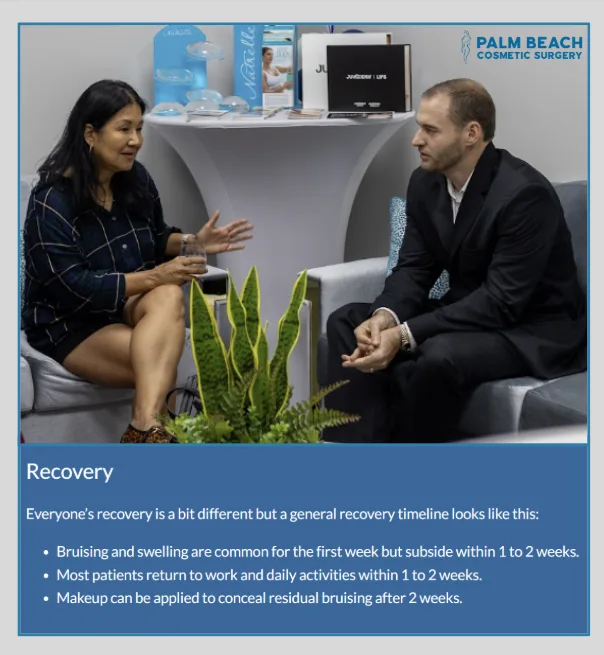
Recovery is more manageable than most people expect, and it's gradual rather than a single finish line. Swelling and bruising are most noticeable in the first few days, then ease steadily.
Here's a general timeline for what you can expect:
- Bruising and swelling are common the first week and usually settle within one to two weeks
- Most people return to work and daily activities within one to two weeks
- Makeup can cover any lingering bruising after about two weeks
- Plan to skip contact lenses for the first two weeks while the area heals
A few simple habits help you heal faster. Sleeping with your head elevated and using cool compresses keeps swelling down, and gentle movement matters too. Light walking is encouraged starting the night of your surgery to support circulation. Any soreness is usually mild, and most patients need prescription pain medicine for only about three days, if at all.
The team at Palm Beach Cosmetic Surgery sends you home with detailed instructions and stays available for questions, which turns an anxious recovery into a calm one. Final results settle in over the following weeks, and the refreshed look typically lasts several years.
What are the risks and side effects of lower blepharoplasty?
Lower eyelid surgery is generally safe, and the vast majority of patients heal without any real trouble. Still, it's a real surgery, and understanding the possibilities helps you make a confident decision rather than an anxious one.
The most common effects aren't complications at all. They're normal parts of healing: swelling, bruising, and eyes that feel dry or sensitive to light for a short while. These fade as you recover. One thing experienced surgeons watch for is ectropion, where the lower lid pulls slightly away from the eye, which is uncommon and most often linked to removing too much skin. Handling skin conservatively and supporting the lid during surgery is how that's largely avoided.
A hollowed, skeletal look is another concern you may have read about, and it traces back to older techniques that removed too much fat. Repositioning fat instead of aggressively removing it is the modern fix, preserving a smooth, natural contour. Truly serious problems, like sudden severe pain with vision changes, are rare. The guidance is simple: call your surgeon right away if anything feels alarming, since prompt attention resolves the great majority of issues.
This is where the choice of surgeon carries the most weight. Choosing a board-certified surgeon* like Dr. Sistare, is one of the biggest factors in keeping your risk low and your result natural. Incisions are placed discreetly, either inside the lid or along the lash line, so once healed they're typically very hard to notice.
Eyelid surgery patient Victoria, treated at our West Palm Beach office, described her experience:
"From the first appointment, he was thoughtful, clear, and attentive. He took the time to explain everything, answer my questions, and made sure I felt comfortable throughout the process."
How much does lower eyelid surgery cost, and does insurance cover it?
Cost is one of the first things people want to know, and it's a fair question to ask early. The price of lower eyelid surgery depends on the technique used, the complexity of your case, and whether you combine it with another procedure.
The American Society of Plastic Surgeons put the average surgeon's fee for lower blepharoplasty between $3,709 and $6,500 nationally in 2024. A full quote usually folds in anesthesia, the facility, and follow-up care, so ask what's included upfront to avoid surprises.
Insurance is worth understanding clearly. Lower eyelid surgery done to smooth bags is cosmetic, so it generally isn't covered. Upper eyelid surgery can be different, since insurance may help when drooping upper lids block your vision and you can document the impairment with an eye exam and photos.
Affordability shouldn't be the thing that stands between you and feeling like yourself. To keep the procedure accessible, we offer flexible financing through Cherry, CareCredit, and Alphaeon Credit, so you can spread the cost into a monthly payment that fits your budget.
Where do you go from here?
If you've spent years and a small fortune on products promising to erase under-eye bags, a little skepticism is understandable. The difference with surgery is that it addresses the actual cause, the fat and loose skin, not just the surface.
A helpful next step costs nothing. View our eyelid surgery before-and-after gallery and look for patients who share your starting point, since real photos show what's realistic far better than any description can.
From there, a personal evaluation maps what under eye bag removal can do for your specific anatomy. When you're ready, Dr. Sistare and the team at our West Palm Beach office offer a thorough, no-pressure consultation where your goals come first.
Schedule your consultation or call 561-462-4469 to take the next step toward feeling refreshed and confident.
Frequently asked questions
Does lower blepharoplasty hurt?
Most patients are surprised by how little discomfort there is. You may feel tightness, mild soreness, and swelling in the first few days, but it's usually well managed, and many people need prescription pain medicine for only about three days, if at all.
Are the results of lower blepharoplasty permanent?
The fat removed or repositioned doesn't typically come back, so results are long-lasting. Your eyes will still age naturally over time, but most patients enjoy a refreshed look for many years before considering any touch-up.
Will lower eyelid surgery change the shape of my eyes?
The goal is the opposite, to refresh your eyes while keeping them looking like you. A careful, conservative approach preserves your natural eye shape, and changes in shape are usually linked to removing too much skin, which a skilled surgeon avoids.
Does lower eyelid surgery leave visible scars?
Incisions are placed where they're hard to see, either inside the lower lid with no external mark or along the lash line. Once healed, any resulting scar is typically very difficult to notice.
Can I drive myself home after under-eye bag surgery?
No, you'll need someone to drive you home on the day of surgery because of the anesthesia and sedation. After that, most patients can drive again within a few days, once they're no longer taking stronger pain medication.
Is lower blepharoplasty safe for older adults over 65?
Age alone isn't a barrier, and many patients in their late 60s and 70s do well. Overall health matters more than the number, which is why a thorough medical review at your consultation determines whether the procedure is a safe, good fit for you.
*Disclaimer: The specialty recognition identified herein has been received from a private organization not affiliated with or recognized by the Florida Board of Medicine. Financing terms vary by credit approval. This content is for educational purposes only and does not constitute medical advice. A consultation with a qualified board-certified surgeon is required to determine the best treatment plan for your individual needs and any questions you may have about a medical condition or procedure.