Your skincare routine is well-established. You've experimented with microneedling, lasers, and filler treatments, all accompanied by specific post-treatment instructions. However, a certain area along your jawline and cheeks remains softer than before, and no amount of contouring fully conceals it.
You're not prepared to take two weeks off work for a full facelift either. The space between "retinol isn't working anymore" and "I want a major surgery" is where many get stuck. A mini facelift was created to bridge that gap.
At Palm Beach Cosmetic Surgery in West Palm Beach, FL, board-certified cosmetic surgeon Dr. Michael Sistare* offers personalized cosmetic surgery plans across a comprehensive range of lift options. These include his mini facelift, the Smartlift, which lifts the lower portion of the face and the upper portion of the neck, along with the deep-plane facelift for more significant needs.
This guide explains who a mini facelift is suitable for, how the procedure is performed, what recovery entails, how it differs from a full facelift, and what results to expect.
Key takeaways
Here's the shortest path through this article, the key points to carry into a consultation.
- A mini facelift is designed for early-to-moderate lower-face aging, such as mild jowls and a softening jawline, rather than for heavy sagging or loose neck skin.
- The procedure uses shorter incisions around the ears, takes about 1.5 to 2 hours under local anesthesia with sedation, and is outpatient.
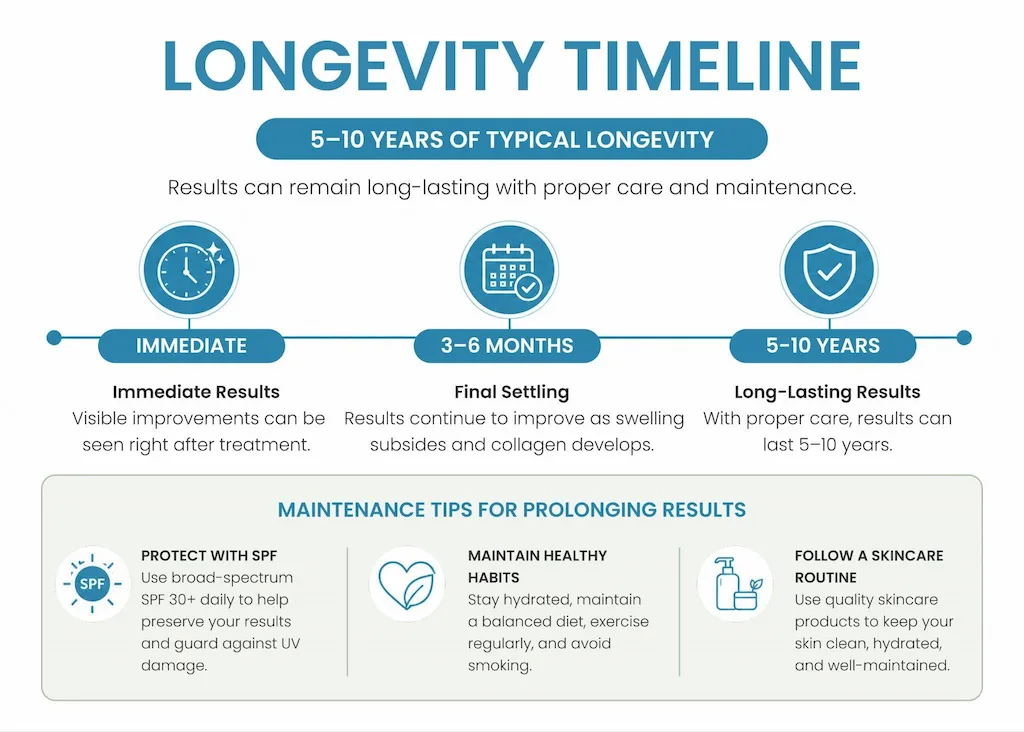
- Most patients return to desk work in 5 to 7 days, with swelling and bruising easing by the end of the second week and final results settling over 3 to 6 months.
- Results typically last 5 to 10 years, compared to 10 to 15 years for a full facelift, with skin quality and sun protection playing a meaningful role in longevity.
- Candidacy depends on skin elasticity, overall health, and realistic expectations; an in-person consultation is the only way to determine whether a mini lift, full facelift, or deep-plane facelift is right for your face.
Am I a good candidate for a mini facelift?
A mini facelift is most suitable for individuals who notice early changes in the lower face, such as mild jowls, a less-defined jawline, and slight cheek sagging, rather than significant sagging or a loose neck. If your face maintains a good tone and your concerns are initial, you likely qualify.
Dr. Sistare starts each lift consultation with a hands-on assessment of your facial anatomy, skin condition, and personal goals, then tailors his advice to your face's specific needs. A cosmetic face tightening procedure isn't a one-size-fits-all choice, and eligibility isn't determined solely by age.
Age range
Most good mini facelift candidates fall somewhere between their late 30s and early 50s, though age alone isn't the deciding factor. The typical average lands in the mid-40s to early 50s. Patients in their 30s may be candidates if they have early, localized sagging, and older patients can still qualify if their skin quality is good.
Skin elasticity and tissue quality
Your skin requires sufficient bounce to drape smoothly after tightening. Good elasticity enables the smaller incisions and lighter dissection of a mini facelift, achieving natural-looking results without visible pulling. Patients with thin, aged, or severely loose skin might experience less benefit from a mini procedure.
Skin quality also influences how long your results last. Younger patients with better collagen tend to keep the refreshed look longer, which is part of why the earlier-intervention approach has grown in popularity.
Health factors
Healthy nonsmokers heal best, full stop. Smoking, uncontrolled diabetes, or conditions that impair healing make surgery riskier and muddy the final result. Blood thinners need to be paused on schedule, and conditions like high blood pressure or clotting disorders require clearance before you can move forward.
Your surgeon will review your full medical history during the consultation. Nothing gets glossed over, because the right answer for your face depends on your whole body.
Signs a mini isn't enough
A mini facelift can't do what it wasn't designed to do. If you have significant neck laxity, heavy jowls, platysmal bands, or more advanced facial descent, a full or deep-plane facelift will deliver results that align with your concerns. For loose, heavy neck skin specifically, a procedure to restore a smooth and firm neckline is usually the better route. Being told a mini isn't enough isn't bad news. It just means honesty up front.
For men
Mini facelifts for men have become increasingly popular, especially among patients over 45 who want to look less tired without appearing overtly "done." The principles are the same: mild-to-moderate sagging, healthy skin, realistic expectations. Incision placement is adjusted for male hairlines and beard patterns during the planning phase.
If your concerns are in the lower face and you're weighing a mini against a more extensive option, schedule a consultation to discuss what best fits your anatomy and goals.
How is the mini facelift procedure performed?
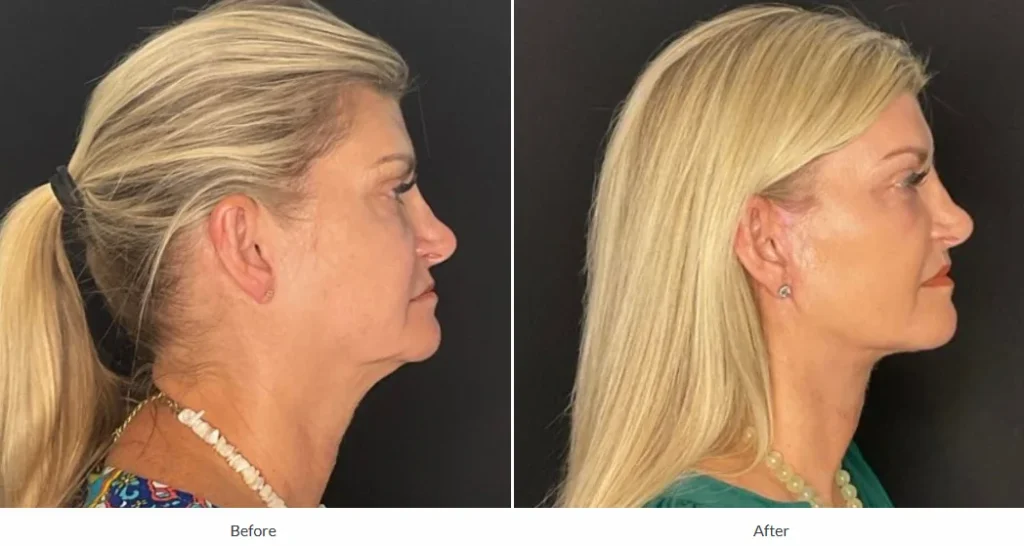
The mini facelift employs a shorter-scar technique focused on the lower face, avoiding the longer incisions and deep dissection typical of a full lift. It is usually performed as an outpatient procedure, allowing you to go home the same day. Understanding how it works can help answer the common question, "wait, what actually happens?" that often lingers in the mind.
Anesthesia
Most mini facelifts are performed under local anesthesia with light sedation, which keeps you comfortable without the full recovery profile of general anesthesia. Some surgeons use local with light IV sedation as a default because it reduces post-op nausea and allows a quicker return to normal. In specific cases, general anesthesia may be appropriate, and your surgeon will decide based on your comfort level and health profile.
Incision placement
A mini facelift is characterized by a shorter incision pattern. The cuts are made around the ear, typically tucked just in front of it and into the crease where the ear meets the face, with minimal extension into the hairline. These incisions are crafted to become hidden as they heal, blending with natural contours and hair.
Tissue lifting
During the surgery, the skin is lifted off the deeper tissue, and the SMAS, the deeper layer of muscle and connective tissue under your skin, is either gently tightened or plicated with sutures. This is what separates a real mini facelift from a superficial "skin lift" that never addresses the scaffolding underneath. Excess skin is trimmed, and the remaining skin is redraped without tension along the incision line.
Duration and setting
A mini facelift typically takes around 90 minutes to 2 hours, compared to 3 to 4 hours for a full facelift. It's outpatient, which means you go home the same day. You'll want someone to drive you and stay with you the first night.
Preoperative steps
Preparation typically includes stopping aspirin, NSAIDs, and other blood thinners at least two weeks before surgery, filling prescriptions before surgery, and preparing a comfortable recovery area at home with pillows for head elevation. Smoking should be stopped at least six weeks ahead of surgery to ensure proper healing, not just to meet candidacy requirements.
What are the benefits and limitations of a mini facelift?
The mini facelift is popular for a reason, but it’s often exaggerated online. The truth lies somewhere between a "weekend miracle" and "not worth it." When suited to the right face at the right time, it provides a significant refresh with much less recovery time than a full facelift. However, for the wrong candidate, it may not meet expectations.
Here's how the tradeoffs stack up:
| Benefits | Limitations |
|---|---|
| Shorter incisions around the ears with minimal visible scarring | Won't correct significant neck laxity or deep jowls |
| Outpatient procedure, often around 1.5 to 2 hours | Less dramatic a change than a full facelift |
| Most patients resume light activity in 5 to 7 days | Typical results last around 5 to 10 years, shorter than a full lift |
| Subtle, natural-looking rejuvenation without a "pulled" look | Still a real surgical procedure with real recovery |
| Often lower cost than a full facelift | Skin quality is dependent, so not ideal for patients with heavy laxity |
A study published in Plastic and Reconstructive Surgery found that mini facelift patients experienced shorter operation times and less post-op swelling than full facelift patients, and reported high satisfaction scores. However, the scope is limited: a surgeon cannot lift tissue they didn't manipulate, so a mini lift won't address neck sagging as effectively as a full facelift.
As with any surgery, there are risks. The vast majority of patients go through the process without issues, but possible concerns include minor bruising, temporary numbness around the incisions, and the rare possibility of mild asymmetry as swelling resolves. A thorough consultation covers everything specific to your case.
Lori S. shared her take:
"Dr. Sistare is amazing, he explains everything perfectly and makes you feel comfortable. He really cares about his patients. The staff is amazing right along with the Surgical center. I have nothing but good things to say about my entire experience. Highly recommend Dr. Sistare!"

What is recovery like after a mini facelift?
Recovery is where mini facelifts genuinely earn their name. The downtime is shorter than a full lift, and the bruising and swelling trajectory is lighter. You'll still have a healing period, though, and having realistic expectations is what makes it feel manageable.
Getting back to work
Most patients return to desk work and light activities within 5 to 7 days, though 7 to 14 days is typical if your job involves more physical activity or client-facing work. The first week is the most visible, with swelling and bruising still present. By the second week, most people feel confident going out without drawing attention.
Swelling and bruising
Swelling usually peaks at day 2 or 3 and starts to settle by the end of the first week. Most bruising resolves within 10 to 14 days, and concealers can cover what's left by the second week. Cold compresses during the first 48 hours and sleeping with your head elevated help reduce swelling.
Exercise and strain
Light walking should start the moment you get home from surgery to encourage healthy circulation, while full strenuous exercise is usually cleared around 4 to 6 weeks post-op. Lifting heavy objects or anything that spikes your blood pressure too early risks bleeding or swelling setbacks. It's worth planning recovery around gentle activity rather than pushing through.
Aftercare and discomfort
Keeping your head elevated, avoiding blood thinners, and adhering to your specific post-op instructions are more important than many realize. Most patients find relief with prescription pain medication for about the first three days, then switch to acetaminophen as the sensation shifts from soreness to tightness. Mild tightness in the cheeks and around the ears is normal and does not indicate any problem.
The timeline for final results
Initial changes become noticeable around two weeks, but the final appearance may take months to fully settle. Most surgeons view 3 to 6 months as the key period for lasting results, with scars continuing to mature for up to a year. Follow-up visits typically occur about a week after the procedure, then again a few weeks later to monitor progress, and finally at the three- to six-month mark. All sutures used are dissolvable, so none need to be removed.
Recovery seems more manageable when someone consistently checks on you. At Palm Beach Cosmetic Surgery, follow-up is proactive. Patients mention receiving direct phone calls post-surgery and having easy access during healing, which makes the experience feel supported rather than solitary, unlike with just a post-op checklist.
How does a mini facelift compare to a full facelift?
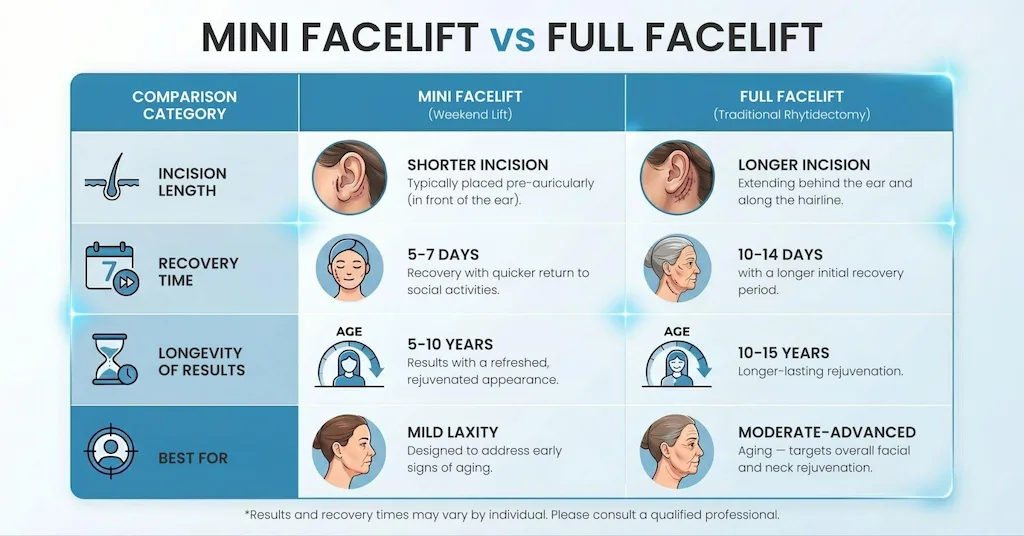
The mini facelift and full facelift aren't interchangeable. They solve different problems, have different recovery profiles, and last different amounts of time, with the two biggest differences being the area covered and the length of the incision. Choosing between them comes down to what your face actually needs, not what sounds easier or more dramatic. Seeing how each lift type looks in real results side by side makes those tradeoffs concrete.
Here's the side-by-side, using ranges commonly cited by the American Society of Plastic Surgeons and clinical comparison studies:
| Factor | Mini facelift | Full facelift |
|---|---|---|
| Areas treated | Lower face, jawline, mild jowls, and the upper neck | Midface, lower face, jowls, and neck |
| Incisions | Shorter, around the ears | Longer, from temples into the hairline and behind the ears |
| Anesthesia | Usually local with sedation | Often general anesthesia |
| Surgery time | About 1.5 to 2 hours | About 3 to 4 hours |
| Typical recovery to desk work | 5 to 7 days | 10 to 14 days |
| How long do results typically last | About 5 to 10 years | About 10 to 15 years |
| Best for | Early to moderate lower-face aging | Moderate to advanced aging, including the neck |
The comparison often oversimplifies an important detail. A full facelift is not merely a longer version of a mini. It targets deeper tissue layers, including issues like neck sagging and midface descent that a mini cannot fully address. Consequently, patients with heavier jowls, loose neck skin, or pronounced midface hollowing tend to benefit more from the full procedure, despite its longer recovery time.
Dr. Sistare performs the full range of procedures, including the deep plane facelift, an advanced technique that releases deeper tissue layers for more natural, longer-lasting results. The deep plane approach is particularly helpful for patients whose aging has moved past what a mini can correct, but who still want a natural outcome without an over-pulled look.
Sharon G., a patient at the West Palm Beach office who had a combined face and neck procedure, described her early recovery:
"Dr. Michael Sistare did surgery for my neck & face and I was very pleased with his expertise during my surgery. He called me later that night after the surgery to check up on me. That was very impressive. The post-opt experience was very good. He answered all my questions and was very patient, caring and kind. A week after my surgery, my face and neck looked significantly better. It boosted my confidence and brought me great joy."
If you're uncertain about which lift is right for you, that's precisely what the consultation is for. The aim isn't to persuade you toward more or fewer surgeries, but to select the procedure that best suits your face.
What results and longevity can I expect from a mini facelift?
A successful mini facelift should make you look refreshed, not changed into someone else. Mild jowls diminish, the jawline becomes more defined, and the lower cheeks appear slightly higher, all achieved subtly, without obvious signs of surgery.
Natural-looking outcomes
Patient-reported outcomes back this up. A study of facelift patients found a mean facial appearance score of 80.7 out of 100, with satisfaction with the cheeks and jawline even higher.
Patients consistently describe the result as "looking like myself, just rested." That's the intended target.
The most visible improvements
The most noticeable changes occur in the jawline, jowls, and lower cheeks. A published clinical study reported an average vertical lift of about 6mm of the jowls, along with notable improvements in jawline definition, cheek positioning, and nasolabial folds. However, it typically doesn't address deep neck bands, pronounced under-eye hollows, or brow descent, each of which requires a separate procedure. A dedicated procedure to fix heavy or sagging eyebrows handles the brow descent a mini lift leaves untouched.
Typical longevity
A mini facelift generally provides results lasting 5 to 10 years, and occasionally longer, especially with good skin health and consistent sun protection. This aligns with common clinical observations.
A comparison study in identical twins found similar short- and mid-term results between short-scar and full-incision techniques at the 1- to 5-year mark. A full facelift, because it addresses more tissue, tends to last 10 to 15 years.
Extending your results
Skincare is more important than many realize. Daily sunscreen, retinoids, and proper hydration create a foundation that helps maintain results. Maintaining a stable weight, avoiding smoking, and following a consistent diet also support this. Touch-up treatments such as botox injection treatments or fillers can sustain a refreshed appearance for years 5 to 10 without the need for additional surgery.
Viewing a variety of real results side by side can greatly aid your decision. Explore the face and neck lift gallery to see before-and-after photos of patients who began with different conditions and achieved naturally refreshed results.
What should you expect at your consultation?
The consultation is where a mini facelift stops being a concept and becomes a specific plan for your face, or, honestly, gets reframed as a different procedure entirely. It's also not a one-way interview. This is your chance to evaluate your surgeon as much as it is their chance to evaluate your anatomy.
At Palm Beach Cosmetic Surgery, your consultation takes place in person at the West Palm Beach office. That matters because a screen can't catch the subtle angles and tissue response that inform a real lift plan. Your surgeon will examine your skin quality, bone structure, and areas of concern, then walk you through what a mini facelift could realistically accomplish versus other options.
The visit is unhurried. You'll discuss your goals, look at photos, review any concerns about scarring or recovery, and walk through what the surgery day and recovery week actually look like. If a mini isn't the right fit, you'll hear that directly, with a clear explanation of what is.
Cost gets discussed openly. Flexible financing through Cherry, CareCredit, and Alphaeon Credit is available, with monthly payment plans and prequalification that doesn't affect your credit. There's no pressure to commit at the consultation.
S Teague, a patient at the West Palm Beach office who had a combined face, neck, eyelid, and resurfacing procedure, shared:
"Dr Sistare preformed a face, neck, upper bleph and CO2 laser. I could not be happier with results! His bed side manner is impeccable, and he is always responsive!! Highly recommend this very skilled professional."
Conclusion
If you’ve found yourself caught in the space between professional skincare and a full surgical transformation, you’ve found your answer. The "in-between" is exactly where the Mini Facelift shines, offering a targeted solution for those who aren't ready for a total overhaul but are finished with the limitations of temporary fixes. You now have the knowledge to decide whether this refined approach suits your anatomy or whether a more comprehensive lift is the right path forward.
Visualizing your results with real patient transformations is an important initial step, but nothing substitutes for a professional, in-person assessment. At our West Palm Beach office, Dr. Sistare goes beyond typical procedures to develop a surgical plan tailored specifically to your features. We prioritize a process that is clear, approachable, and fully centered on your personal goals.
Ready to see what’s possible? Stop wondering which procedure is "the one" and start your journey toward a more vibrant, confident reflection. The look you’ve been imagining is within reach. Schedule your consultation at Palm Beach Cosmetic Surgery today or call us at 561-709-8780. Let’s turn your aesthetic goals into a beautiful reality.
Frequently asked questions
How long is the recovery from a mini facelift?
Most patients return to desk work and light activities within 5 to 7 days, with swelling and bruising easing through the second week. The final result continues to settle over 3 to 6 months as tissue relaxes and scars mature. Your exact timeline depends on your healing pattern and the level of physical activity your work involves.
How much does a mini facelift cost?
Mini facelift cost varies by surgeon training, technique, facility, and geographic location. Personalized pricing is discussed during the consultation rather than quoted as a blanket number. Flexible financing through Cherry, CareCredit, and Alphaeon Credit helps make the investment more accessible.
Does a mini facelift leave visible scars?
Mini facelift incisions are shorter than those of a full lift and are tucked into the natural creases around the ear, so scars are typically minimal and hard to spot once healed. Proper aftercare, sun protection, and time all help scars fade. Scar quality also depends on your skin type, so your surgeon will give you a realistic preview during the consultation.
How long do mini facelift results last?
Mini facelift results typically last 5 to 10 years, depending on skin quality, sun exposure, smoking history, and genetics. Good skincare, sunscreen, and a stable weight all help extend the refreshed look. Some patients choose a second lift or touch-up procedures later, while others are happy with the original result for a decade.
What's the difference between a mini and a full facelift?
A mini facelift targets the lower face and jawline with shorter incisions and a shorter recovery, usually around 5 to 7 days to desk work. A full facelift addresses a larger area, including the midface and neck, with longer incisions, a longer recovery of 10 to 14 days, and results that often hold 10 to 15 years.
Can I get a mini facelift in my 30s?
Yes, though it isn't common. Patients in their late 30s may qualify if they have early lower-face sagging, good skin elasticity, and concentrated concerns well suited to a mini approach. For most people in their 30s, non-surgical options are the right first step, and a consultation helps clarify which category you fall into.
Is a mini facelift safe?
Mini facelifts are considered safe when performed by a qualified surgeon, and the risk profile is generally lower than that of a full facelift because the procedure is less extensive. Common short-term effects include swelling, bruising, and temporary numbness around the incisions. A board-certified surgeon will review all risks specific to your case during the consultation.
What anesthesia is used for a mini facelift?
Most mini facelifts use local anesthesia with light sedation, which keeps you comfortable without the longer recovery profile of general anesthesia. The choice depends on the extent of the surgery, your medical history, and your comfort preferences. Your anesthesia plan is confirmed before the day of surgery, with clear instructions on what to avoid in the hours leading up to it.
Can a mini facelift fix sagging in the neck?
Dr. Sistare's mini facelift, the Smartlift, lifts the lower face, jawline, and the upper portion of the neck, so mild laxity in that upper-neck area can improve. However, significant neck bands or loose, heavy neck skin generally require a neck lift or a full facelift. Combining procedures is often the better path for patients with concerns in both areas.
**Disclaimer: The information is intended for educational purposes only and should not be considered medical advice. Every patient's anatomy, health history, and goals are unique, and outcomes, recovery timelines, and candidacy may vary. The only way to determine whether the procedure is right for you is through a one-on-one consultation with a board-certified cosmetic surgeon. Always discuss your specific concerns, risks, and expectations with your provider before making any decisions about surgery. The specialty recognition identified herein has been received from a private organization not affiliated with or recognized by the Florida Board of Medicine."