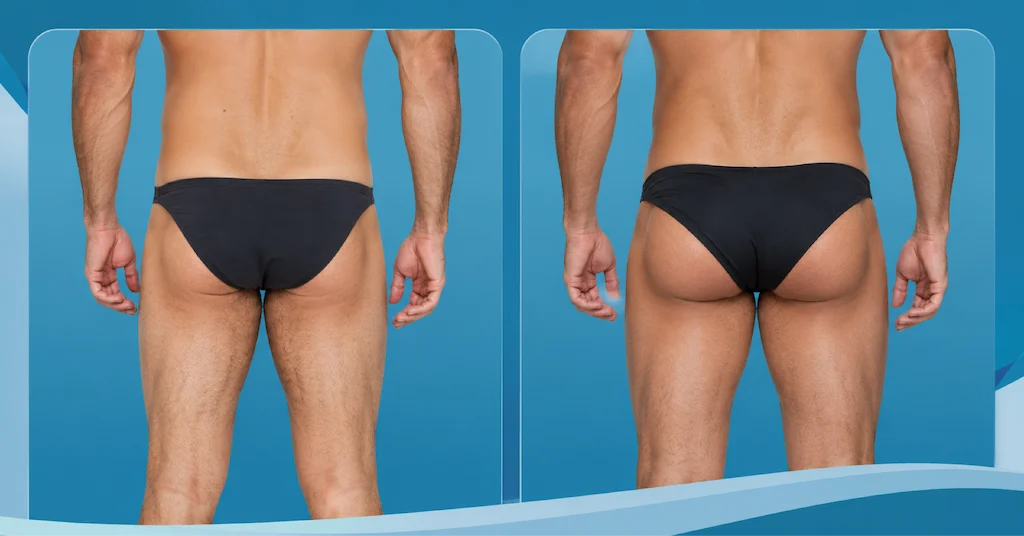
You have probably seen the terms scrolling past you: butt lift, BBL, gluteal lift, non-surgical lifts. They sound interchangeable, yet they describe surprisingly different procedures with different results, recoveries, and price tags.
So which one actually does what you want? That question trips up almost everyone at the start of their research. Buttock enhancement is among the most-requested body procedures worldwide, with ISAPS counting 644,770 buttock augmentations globally in 2024. The catch is that "butt lift" is really an umbrella term, not a single operation.
At Palm Beach Cosmetic Surgery in West Palm Beach, FL, board-certified cosmetic surgeon* Dr. Michael Sistare offers several paths to a fuller, lifted shape, from surgical lifts and fat transfer to his own-tissue auto-augmentation technique. This guide compares every major option, walks through recovery and safety, and helps you find the approach that fits your body and your goals. It's the kind of range you'd look for in a full service cosmetic surgery practice.
Key takeaways
- "Butt lift" is an umbrella term. A traditional lift tightens sagging skin without adding size, while a BBL, implants, and auto-augmentation are the procedures that actually add volume.
- The right option depends on how much donor fat you have, whether your concern is sagging skin or lost volume, and how much downtime you can take.
- Surgery delivers lasting results, while non-surgical injectables and energy devices offer subtler, temporary changes with little to no downtime.
- Recovery centers on protecting the treated area: light walking the night of surgery, a compression garment for about six weeks, and avoiding direct sitting while everything heals.
What's the difference between a butt lift, a BBL, and other enhancement options?
Here is the distinction that clears up most of the confusion: a traditional butt lift does not make your buttocks bigger. A gluteal lift, as it is also called, removes loose, sagging skin and repositions what remains for a firmer contour. It tightens and lifts, but adds no volume on its own.
Volume is a separate goal, achieved through fat transfer, implants, or auto-augmentation. That is why so many "butt lift" searches end in more questions than answers.
Dr. Sistare performs three of these approaches, and one of them sets the practice apart.
A gluteal lift handles loose skin. A Brazilian butt lift, a fat transfer to the buttocks, adds curves using your own purified fat. Gluteal auto-augmentation repositions a flap of your own lower-back tissue to add fullness without implants or grafting. Many patients value this natural-tissue option when they have enough tissue to work with.
Here is how the most common options compare at a glance:
| Option | What it does | Adds volume? | Often best for |
|---|---|---|---|
| Traditional gluteal lift | Removes excess skin, tightens and lifts | No | Sagging skin, often after weight loss |
| Brazilian butt lift (BBL) | Transfers your own purified fat | Yes | Adding fullness when donor fat is available |
| Gluteal auto-augmentation | Repositions your own lower-back tissue | Yes | A lift plus volume from your own tissue |
| Buttock implants | Places soft silicone implants | Yes | Limited donor fat, wanting more projection |
| Non-surgical injectables | Stimulate collagen or add filler volume | Subtle, temporary | Small refinements without surgery |
Which one is right depends on your starting point. If sagging skin is your main concern, a lift makes sense, while firm skin over a flat shape points toward a volume procedure.
How do the surgical options compare in procedure, results, and suitability?
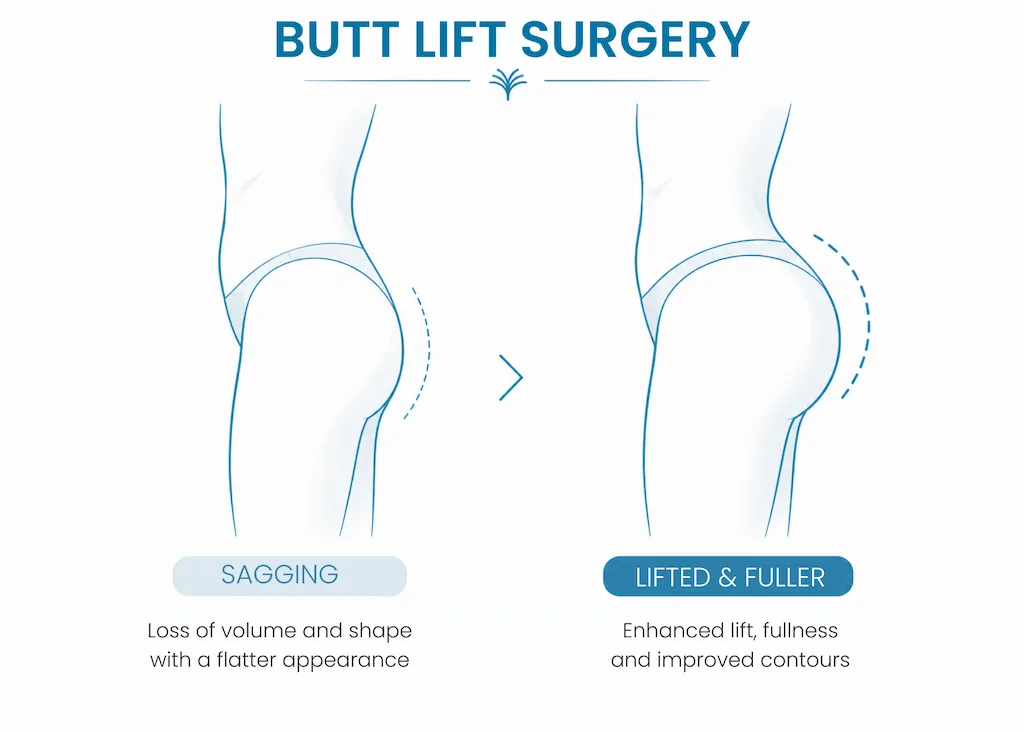
Surgical buttock enhancement falls into a few clear categories, and knowing how each is performed takes a lot of the mystery out of the decision. Each is done under anesthesia so you stay comfortable, and the right fit comes down to your anatomy and goals.
Brazilian butt lift (fat transfer)
A BBL is a two-step procedure. Your surgeon first performs a tumescent fat removal procedure on donor areas like the abdomen, flanks, or thighs. That fat is purified, then injected into the buttocks in layers, placed above the muscle for a fuller shape. Because it uses your own fat, the result feels natural, though some is reabsorbed in the early weeks.
Gluteal implants
For patients without enough donor fat, soft silicone implants can add projection. Your surgeon places each implant through a small incision, often in the crease between the buttocks. Implants give reliable fullness when fat transfer is not an option.
Traditional gluteal lift
A surgical lift addresses loose skin rather than volume. The incision usually sits low, below the waistline or in the natural crease, so it stays hidden under clothing and swimwear. Your surgeon removes excess skin and tightens the rest.
Gluteal auto-augmentation
This approach is a clever middle ground. Instead of discarding the tissue removed during a lift, your surgeon repositions some of it to add fullness. You get a lift and added volume in one step, using only your own tissue.
What are the best non-surgical butt lift alternatives, and what can they realistically achieve?
Not everyone wants surgery, and that is a completely valid place to start. Non-surgical options can refine your shape with little to no downtime, as long as you keep expectations realistic. They smooth and subtly enhance rather than dramatically reshape, and most are temporary.
Collagen-stimulating injectables
Sculptra®, made from poly-L-lactic acid, does not fill instantly. It prompts your body to build its own collagen, so fullness develops over a series of sessions spaced weeks apart. Radiesse® works on a similar principle.
Hyaluronic acid body fillers
Hyaluronic acid fillers attract water and add volume more immediately. They can soften hip dips or add a gentle lift, but the effect fades as the body absorbs the gel and usually needs maintenance.
Muscle-toning and skin-tightening devices
Energy-based devices such as EMSCULPT® NEO use electromagnetic energy to tone the gluteal muscles, while radiofrequency adds heat to tighten skin. They improve firmness and tone, but they do not add the kind of volume a surgical procedure delivers.
The honest summary? Non-surgical treatments are great for subtle, temporary improvement, but they are not a substitute for surgery when you want a significant, lasting change. For a closer look at how each injectable compares to surgery, a full breakdown of butt fillers versus a BBL weighs safety, results, and cost.

What does recovery look like, and how do you care for your buttocks after enhancement?
Recovery is the part most people quietly worry about, and knowing the rhythm ahead of time helps. The core principle is simple: protect the treated area while it heals. At Palm Beach Cosmetic Surgery, patients get clear, step-by-step guidance and attentive follow-up so nothing feels like a guessing game.
Here is the general timeline most patients can expect:
- The night of surgery: light walking begins, which gently supports circulation and healing.
- First few days: prescription pain medicine is usually needed for only about three days.
- First couple of weeks: most patients return to desk work and light daily activities.
- Through about six weeks: you wear a compression garment and avoid sitting directly on your buttocks, using a special cushion when you do sit.
- Around six weeks: you can gradually ease back into exercise.
- Three to six months: final results settle as swelling fades and any transferred fat stabilizes.
A few details tend to reassure people. The sutures are dissolvable, so there is no separate appointment to have them removed. Incisions are placed discreetly and soften over time, and with a BBL, the fat that survives those first weeks is there to stay.
Patient Lori, who valued attentive follow-up care at our West Palm Beach office, shared her experience:
"Dr. Sistare is amazing, he explains everything perfectly and makes you feel comfortable. He really cares about his patients."
Recovery asks for a little patience, but with the right plan it is far more manageable than most people fear.
How do the safety profiles and risks compare for surgical versus non-surgical procedures?
It is normal to feel a flicker of nerves when the conversation turns to risk, and you deserve a straight answer rather than a scary one. The reassuring reality is that most patients move through these procedures without serious problems, especially with a qualified surgeon using modern technique.
Surgical safety
The BBL once carried a reputation as one of the riskier cosmetic surgeries, because fat injected too deeply could endanger blood vessels. Technique has changed that picture.
The standard now is to place fat only in the soft tissue above the muscle, often with ultrasound guidance. That shift has made it far safer than its early reputation suggests. Implants carry their own considerations, like a small chance of firm scar tissue forming around them, which your surgeon will walk you through.
Non-surgical safety
Injectable options avoid the risks of surgery, but they aren't entirely without risk. Fillers placed in the buttocks can occasionally cause lumps, shifting, or irritation, so product choice and an experienced injector matter.
Choosing a qualified surgeon
This is where credentials stop being a formality. Dr. Sistare is board certified in cosmetic surgery by the American Board of Cosmetic Surgery and in general surgery by the American Osteopathic Board of Surgery. He is also fellowship-trained and a published researcher. That depth of training is what helps a surgeon prevent problems rather than simply react to them.
How do you choose the best butt lift or enhancement option for your body, budget, and lifestyle?

The best procedure is the one that matches your anatomy, your goals, and the recovery you can realistically fit into your life. A simple way to think about it:
- Mainly sagging skin after weight loss: a traditional gluteal lift.
- Firm skin but a flat or limited shape: a BBL using your own fat.
- Sagging skin plus lost volume: a combined lift with auto-augmentation.
- Limited donor fat but wanting more projection: implants or collagen-stimulating injectables.
Body type genuinely shapes the conversation. For patients with little donor fat, implants or composite approaches can create fullness when there simply isn't enough fat to transfer. Many patients also pair buttock enhancement with a tummy tuck, liposuction, or breast surgery for a more complete result.
Cost is part of the equation too, and at Palm Beach Cosmetic Surgery it is treated as practical information, not a taboo. You receive a personalized estimate at your consultation, plus flexible financing through Cherry, CareCredit, and Alphaeon Credit so your goals stay within reach.
An in-person visit matters here, and not only so your surgeon can assess your anatomy and goals. It is equally your chance to evaluate him and decide whether the fit feels right. That hands-on, face-to-face assessment is something a screen simply cannot replicate. When you are ready, you can schedule a consultation at our West Palm Beach office, or call 561-462-4469 to start the conversation.
Patient Alicia, who weighed her options at our West Palm Beach office before deciding, described the experience:
"The consultation was thorough, and they took the time to understand my goals."
Conclusion
Remember those interchangeable-sounding terms from the start? With the differences laid out, the choice gets far less overwhelming. A lift tightens, volume procedures add fullness, and the right path is simply the one that fits your body and your goals.
A great next step is to browse real patient photos that match your starting point. You can view before-and-after results to get a feel for what is possible, then let those images shape the questions you bring to a consultation.
When you are ready, Dr. Sistare and his team in West Palm Beach welcome you to take that next step. Their approach pairs transparent guidance with accessible care, reflecting a belief that your journey to confidence should never feel out of reach. You can reach out to our team or call 561-462-4469 whenever the time feels right.
Frequently asked questions
Are silicone buttock implants safe, or can they rupture?
Modern buttock implants are made of soft, durable silicone and are built to last. As with any implant, there is a small chance of issues like shifting or firm scar tissue forming over time. Choosing an experienced, board-certified surgeon is the best way to keep those risks low.
What is the difference between Sculptra and Radiesse for a non-surgical butt lift?
Both are collagen-stimulating injectables that build volume gradually rather than instantly. Sculptra uses poly-L-lactic acid, while Radiesse uses calcium-based microspheres, and both prompt your body to make its own collagen over a series of treatments. Your provider can advise which suits your goals.
Will a traditional butt lift remove my cellulite and stretch marks?
A traditional lift mainly tightens loose skin and improves contour, so it is not a dedicated cellulite or stretch-mark treatment. That said, removing excess skin can improve the look of stretch marks on the tissue taken away. Smoothing techniques are sometimes discussed alongside a lift during your consultation.
Does a buttock lift require general anesthesia, or can it be done under local?
Surgical buttock enhancement is typically performed under general anesthesia so you stay completely comfortable. The exact approach depends on the procedure and your overall health. Your surgeon and anesthesia team will review the safest plan before your surgery date.
Can you get a BBL if you are very skinny and have low body fat?
A BBL relies on having enough donor fat to harvest, so limited body fat can make it difficult. In that case, implants or collagen-stimulating injectables are often better suited to adding fullness. A consultation is the surest way to learn which option your anatomy supports.
*Disclaimer: The specialty recognition identified herein has been received from a private organization not affiliated with or recognized by the Florida Board of Medicine. This content is for educational purposes only and does not constitute medical advice. A consultation with a qualified board-certified surgeon is required to determine the best treatment plan for your individual needs and any questions you may have about a medical condition or procedure.