The Quick answer
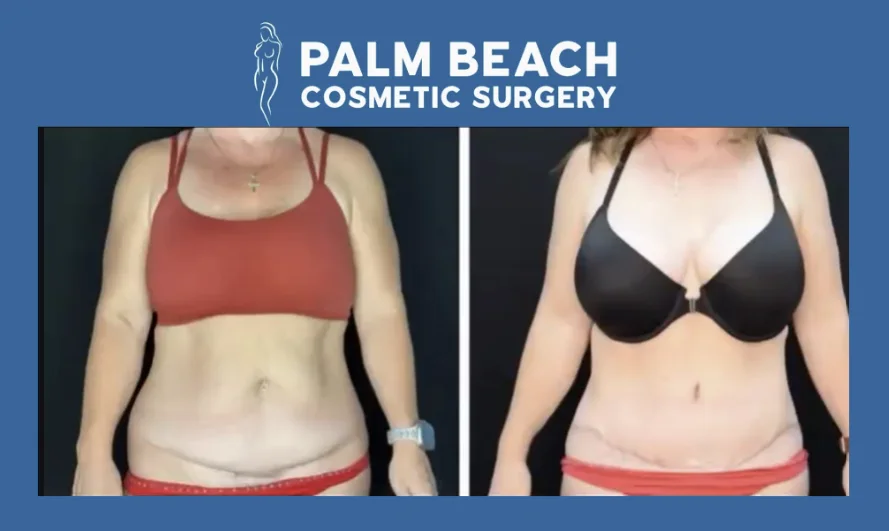
Palm Beach Cosmetic Surgery explains what lasts and what changes after a tummy tuck over the years. The skin and fat removed are gone for good and the muscle repair is built to last, but the result is not frozen in time, since natural aging, gravity, weight gain, and future pregnancy can all soften your contour. Scars fade substantially over the first 12 to 18 months into a thin, low line, though no surgical scar disappears completely. Keeping a stable weight, finishing pregnancies first, protecting the scar from sun, and healthy habits are the biggest things you can control, which Dr. Michael Sistare helps patients navigate in West Palm Beach.
Who wouldn't want a flatter, more defined stomach? With many people opting for a tummy tuck to achieve something they've worked hard for, it's no surprise that abdominoplasty ranks among the most-requested body procedures. According to ASPS, 171,064 were performed in 2024 alone.
But once the results are in, a quieter question often follows: Will this still look the same in five years? It's something people carry, whether they're a few months out from surgery or still deciding whether to book a consultation. And it's a completely fair question to ask.
At Palm Beach Cosmetic Surgery in West Palm Beach, FL, board-certified cosmetic surgeon* Dr. Michael Sistare focuses on results that look natural now and age well. This article covers what stays permanent and what can change. You'll learn how weight changes and pregnancy affect outcomes, how scars settle over time, and the signs that a follow-up visit is worth it.
Key takeaways
- The skin and fat removed during a tummy tuck are gone for good, and the muscle repair is built to last, but the result is not frozen in time.
- Weight gain after surgery does not restore what was removed, though it can stretch the remaining skin and soften your contour, especially with larger or faster changes.
- Tummy tuck scars fade substantially over the first year to 18 months and usually settle into a thin, low line, but no surgical scar disappears completely.
- A stable weight, finishing pregnancies first, sun protection for the scar, and healthy habits are the most important things you can control to keep results looking good for years.
Do tummy tuck results really last over the years?
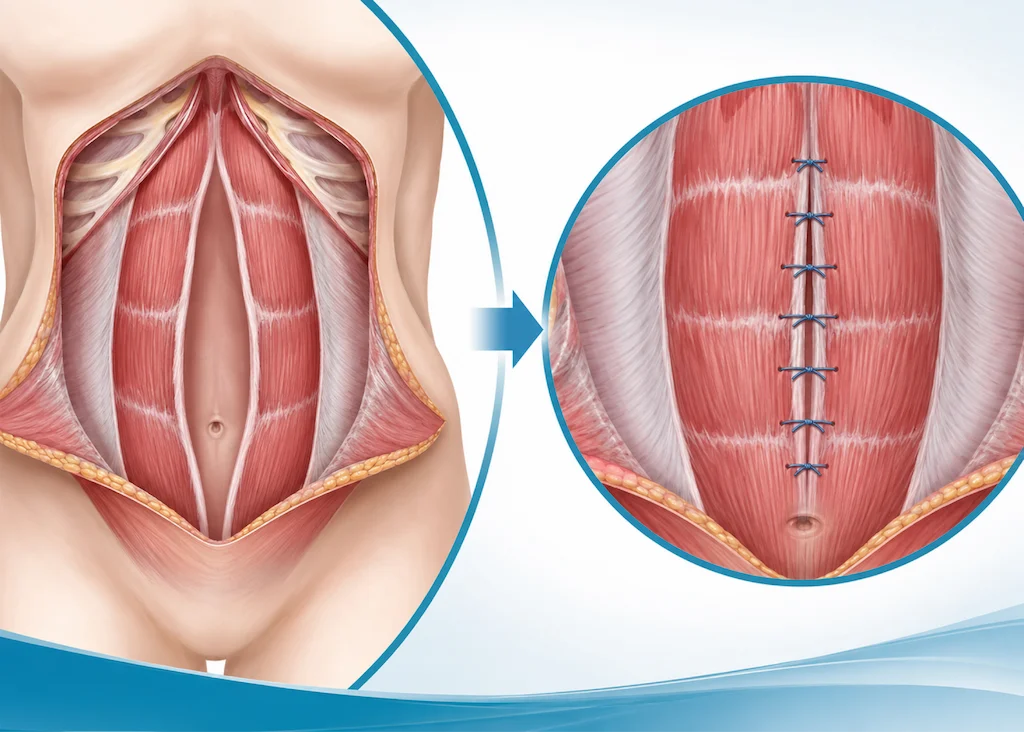
Yes, the reason comes down to what the surgery actually changes. A tummy tuck with a plastic surgeon removes excess skin and fat permanently and tightens the abdominal muscles that pregnancy or weight changes can separate. Those structural changes give you a flatter, firmer midsection that holds up over time.
Here is the honest part. Results are long-lasting. However, they are not permanent. As your body continues to age, gravity keeps working, and skin slowly loses some of its elasticity. So the stomach you see at one year and the one you see at ten can look slightly different, even when nothing went wrong.
| What stays permanent | What can shift over the years |
|---|---|
| The skin and fat that were removed | Skin firmness as you naturally age |
| The repaired, tightened abdominal muscles | Contour after major weight gain or loss |
| The reduction in stretch marks within the removed skin | The result after a future pregnancy |
It also takes a few months to see the final result. Swelling is normal early on, and your final contour settles as it goes down. Scars continue to mature for up to a year. Knowing that timeline can save you worry in those first months, when things are still changing day to day.
What happens if you gain weight after a tummy tuck?
It can be worrying to think about the results of a tummy tuck if you just gain weight several months after the procedure. To make it clear, gaining some weight does not undo your surgery or bring back the skin and fat that were removed. However, it can alter the appearance of the results. Remaining fat cells can expand, and the skin may stretch again, especially with larger or faster weight gains.
You're not alone in considering this, and it's a reasonable question. The muscle repair tends to be the most durable part of the outcome, typically remaining intact unless subjected to major stretching, such as during future pregnancy or significant weight changes. For those seeking additional reassurance, Dr. Sistare offers an optional internal corset, in which a mesh is added for a flatter, tighter muscle repair. It results in a narrower waistline and a more resilient outcome, less prone to relapse, and is also an option for larger muscle repairs.
Weight gain cannot shift fat from areas that haven't been treated. A tummy tuck only targets the abdomen, so any weight gained in the back, arms, or thighs will appear in those regions, not in the stomach that was repaired. That's why surgeons recommend achieving and maintaining a stable, comfortable weight for around three months before surgery, rather than trying to reach a specific target afterward.
How significant is change? Small shifts of a few pounds often go unnoticed. Staying within 10 to 15 pounds of your target weight usually best preserves your shape. Losing a significant amount of weight later can also cause changes, sometimes resulting in new looseness. That’s why achieving and maintaining a stable weight is the primary goal.
How do tummy tuck scars look years later?
A tummy tuck scar tells a story as it heals, and the early part is the most noticeable. In the first few weeks, it often looks red or pink, feels firm, and might be slightly raised. Over the next 12 to 18 months, it gradually becomes flatter, fades in color, and blends in more with the skin. Most of the changes happen during that initial period.
Over the years, a well-healed scar usually turns into a thin, flat line that sits just below where your underwear or swimsuit would cover. Your surgeon deliberately places the incision low so it's easier to hide. There are a few things that can make a scar more likely to stay wider, darker, or thicker over time.
- Tension on the healing wound, or any infection or delayed healing
- A personal tendency toward raised (hypertrophic) or keloid scars
- Sun exposure on a new scar, which can darken it for months
- Skin tone, since deeper skin types can hold color changes longer
Good news on the parts you control. New scars are sensitive to the sun for the first year to 18 months, so covering the area or using a strong sunscreen genuinely helps. If a scar stays raised or dark well after healing, options like silicone sheeting, steroid injections, laser treatments, and scar revision can soften it, usually once the scar has matured. What scars will not do is vanish completely, because any deep incision leaves a permanent mark, even a faint one.
Patient Cole, who valued a calm, reassuring first visit, shared his experience:
"I recently had the opportunity to visit Dr. Michael Sistare at Palm Beach Cosmetic Surgery and from the moment I stepped into the clinic, I was welcomed by a warm and attentive staff who made me feel at ease."
If cost is a concern in your planning, treatments such as scar care and revisions become more manageable with flexible financing options available through Cherry, CareCredit, and Alphaeon Credit. For the bigger picture on pricing, what a tummy tuck costs and how to pay for it breaks down the full range.
Can a tummy tuck change your body shape beyond a flatter stomach?
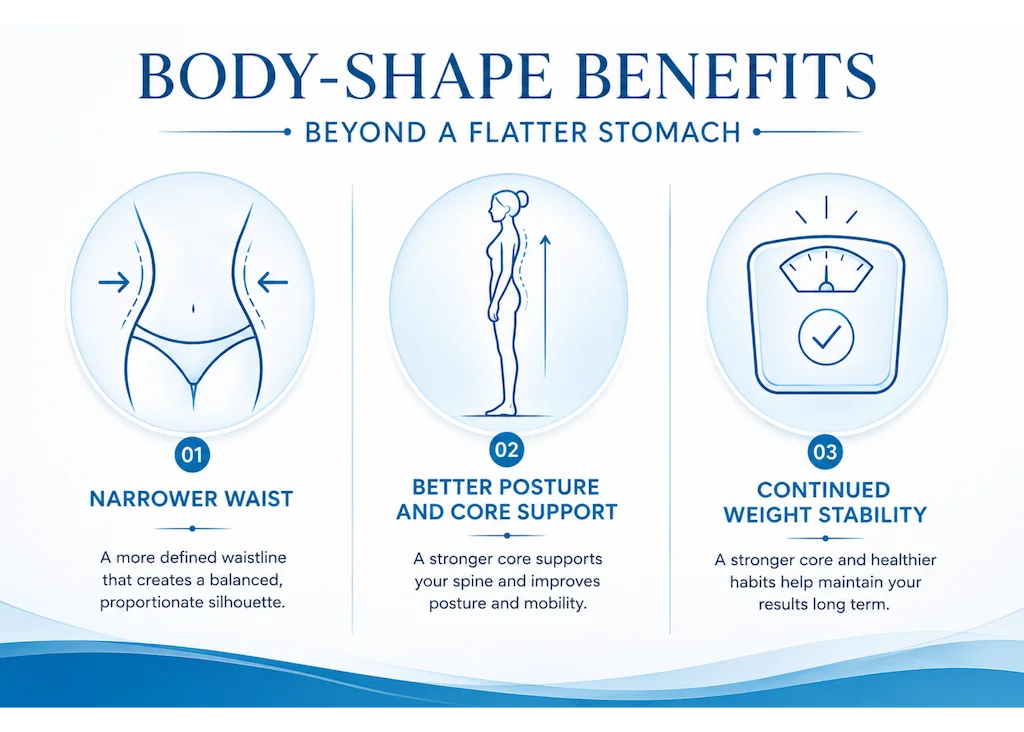
This is a question most people ask in the consultation room. “Can a tummy tuck change your body type?” The answer is yes. By removing excess skin and tightening the muscle wall, a tummy tuck can narrow the waistline and improve the balance between your waist and hips. For many people, that change in proportion is what makes clothes fit differently, not just the loss of a bulge.
A narrower waist and better proportions
Pregnancy and weight fluctuations can cause the abdominal muscles to split down the middle, making the stomach appear looser even if weight remains stable. During a tummy tuck, these muscles are sewn back together, similar to tightening a loose belt, which cinches the waist and results in a flatter, more defined appearance. Most procedures also include some liposuction to improve the surrounding contours. The goal is to achieve better proportions, not to lower the scale number, so consider it sculpting rather than shrinking.
Posture and core support
Repairing those muscles can do more than change how you look. When the abdominal muscles separate, the core loses some of the support that keeps you upright, and that strain often ends up in your lower back. Stitching the muscles back together rebuilds that support from the inside. Some people find their posture improves and their back feels better as a result. Tightening these muscles can also improve urinary incontinence for some patients, a functional benefit that goes beyond the visible change. It won't replace strengthening exercises, but for the right candidate it is a welcome bonus.
Continued weight loss after surgery
Here is a surprising one. A 2025 study of 188 patients found that many continued to lose weight after their tummy tuck. The average was about 5 to 6 pounds at three to six months, and nearly 10 pounds by five years in the smaller long-term group.
The surgery itself removes only a few pounds, so this seems to be more about momentum. A flatter, more comfortable body makes healthy habits easier to keep. And a steady weight is what keeps these gains looking their best.

When should you worry your tummy tuck results are changing?
Most long-term change is gentle and expected, especially if your weight is steady. A little less firmness as you age is normal, not a red flag. The clearer warning sign is a change that tracks with overall weight gain: new fullness, a return of looseness, or stretching that keeps progressing rather than holding steady.
It is worth discussing a follow-up or revision if you notice persistent bulging, new asymmetry, recurring skin laxity, or a scar problem that persists long after healing. Two life events can also reshape the result. A future pregnancy can stretch the skin and muscle wall again, which is why many surgeons suggest finishing your family first. A very large weight loss can leave new loose skin.
A check-in serves the same purpose as a consultation, and it works both ways. It's not just your surgeon evaluating you; it's also your opportunity to review the plan, ask tough questions, and determine what feels right. At Palm Beach Cosmetic Surgery, this discussion takes place in person with a skilled cosmetic surgeon Palm Beach at the West Palm Beach office, where a hands-on assessment can reveal insights that a photo simply cannot.
That kind of thorough, unrushed visit is what patients tend to remember most.
Patient Charlotte, who saw the team at the West Palm Beach office, described her visit:
"I had a fantastic experience at Dr. Michael Sistare's office. From the moment I walked in, the staff was warm and welcoming. Dr. Sistare was incredibly informative and took the time to thoroughly explain every step of the process, which made me feel completely at ease."
To protect your result for the long run, a few habits do most of the work:
- Keep your weight stable and avoid big swings up or down
- Hold off on surgery until you are done having children
- Don't smoke, and follow your aftercare instructions closely
- Stay active to support your core and overall health
The way the repair is constructed is important for long-term success. Dr. Sistare employs a progressive tension suturing method that stabilizes the tissue layers and reduces fluid accumulation. This approach explains why most of his patients recover without surgical drains and maintain a smooth, lasting result.
If your result has changed and you want a straightforward understanding of your options, book a consultation for an honest, no-pressure assessment.
What does life after a tummy tuck really look like?
The worry you started with, the one about whether a tummy tuck can last, deserves an honest answer. It does last in the ways that matter most. The parts that shift over time are mostly the same as those that change for everyone: a little aging, a little gravity, and whatever life brings. None of that erases the tummy tuck results you worked towards.
Here's the reassuring part: understanding what to expect years from now is key, and you've already taken a step that often leads to long-term happiness with results. The best way to visualize your potential outcome is to look at actual examples, such as browsing a tummy tuck photo gallery to see how the contour remains at one, five, and ten years. Following that, a personal consultation can address questions unique to your body, without any pressure to decide on that visit.
When you are ready, the team at Palm Beach Cosmetic Surgery in West Palm Beach is here to help. Dr. Sistare believes your journey to confidence should feel clear, supported, and within reach. Reach out to our team or call 561-786-2112 to start the conversation.
Frequently asked questions
How long do tummy tuck results usually last?
Results are considered long-lasting and can last for many years, even a lifetime, when your weight remains stable. The skin and fat that were removed do not return. Natural ageing and gravity still affect the abdomen gradually over time.
Can weight gain ruin a tummy tuck?
Weight gain does not undo the surgery, but significant gain can stretch the remaining skin and soften your contour. Smaller fluctuations of a few pounds usually go unnoticed. Maintaining a steady weight is the best way to protect your result.
Will my stomach get bigger again after a tummy tuck?
If you gain a significant amount of weight, your tummy may look fuller again, since a tummy tuck is not a weight-loss surgery and doesn't stop future fat gain. The remaining fat cells can enlarge, and the skin can stretch. Maintaining a stable weight helps preserve your desired contour.
Do tummy tuck muscles stay tightened permanently?
The muscle repair is designed to be long-lasting and typically remains intact for years. However, significant stretching from a future pregnancy or a substantial weight change can still weaken it. For added durability, an optional internal corset reinforcement, a mesh that supports the repair, is available.
Can pregnancy after a tummy tuck change the result?
Yes. Pregnancy can stretch the repaired skin and muscle wall again, potentially softening the cosmetic result. For that reason, many surgeons recommend waiting until you have finished having children. Some patients opt for a revision later to refresh the contour.
How much weight can I gain before my tummy tuck looks different?
There is no universal cutoff, but staying within about 10 to 15 pounds of a steady goal weight tends to preserve the result best. Larger or faster gains are more likely to stretch the skin. Gradual, modest changes are usually well tolerated.
Do tummy tuck scars fade after 5 years?
Yes. Most fading occurs in the first 12 to 18 months, and by five years a well-cared-for scar is typically a thin, pale, low line. It will not disappear completely, as any deep incision leaves a permanent mark. Early sun protection makes a real difference in how it settles.
Can natural aging make a tummy tuck look less dramatic?
It can, slightly. As skin loses elasticity over the years, the abdomen may look a little less firm, even though the surgery is still doing its job. This is normal and gradual. Maintaining a healthy, stable weight helps keep the result looking its best.
Will I continue to lose weight after a tummy tuck?
Some patients do. A few studies have found people kept losing a small amount of weight in the months and years after surgery. This is likely because a flatter, more comfortable body makes healthy habits easier to maintain. The surgery itself removes only a few pounds.
Do I need a revision tummy tuck years later?
Sometimes. A revision may be appropriate after a major weight change, a pregnancy, or if you develop lingering contour or scar concerns. In published series, only a small share of patients pursue one. An in-person evaluation is the best way to determine whether it is worth considering.
Does a tummy tuck improve back pain long term?
Sometimes, tightening separated abdominal muscles can strengthen the core, providing a firmer base. Some patients also report experiencing less low-back strain after the procedure. An in-person consultation can help you determine if this treatment aligns with your goals.
*Disclaimer: The specialty recognition identified herein has been received from a private organization not affiliated with or recognized by the Florida Board of Medicine. This content is for educational purposes only and does not constitute medical advice. A consultation with a qualified board-certified surgeon is required to determine the best treatment plan for your individual needs and any questions you may have about a medical condition or procedure.