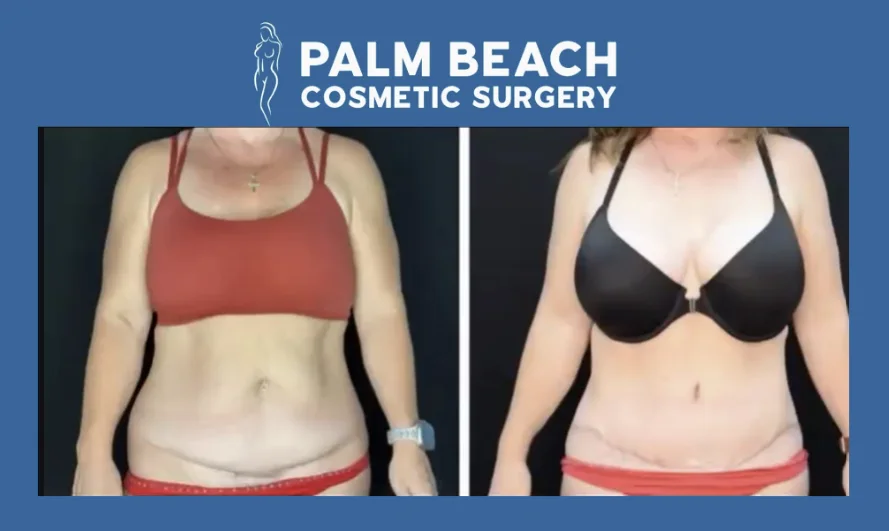
You've been eating right and exercising for months, maybe years, but your midsection still won't cooperate. Loose skin, stubborn fat, and muscles that feel weak despite countless crunches can leave you feeling stuck. According to the American Society of Plastic Surgeons, 171,064 abdominoplasty procedures were performed in 2024, making it the third most popular cosmetic surgery in the country.
At Palm Beach Cosmetic Surgery in West Palm Beach, board-certified cosmetic surgeon Dr. Michael Sistare helps patients reclaim confidence in their bodies. This guide will help you understand everything, from what a tummy tuck is, what to expect during the procedure and recovery, and how to take the next step toward a consultation.
What Is a Tummy Tuck and How Does It Work?
A tummy tuck, also called abdominoplasty, is the cosmetic surgery for tightening loose belly skin surgically and removing stubborn fat while repairing weakened or separated abdominal muscles. The goal is a firmer, flatter, contoured midsection that diet and exercise alone can't achieve.
During surgery, your cosmetic surgeon makes a horizontal incision from hip to hip, positioned low enough to be hidden by a swimsuit. Through this incision, the underlying abdominal muscles are repaired. This step is especially important for patients with diastasis recti, a condition where the abdominal muscles separate during pregnancy or from significant weight changes.
Once the muscle layer is secured, excess skin and stubborn fat are carefully removed. For patients who want additional sculpting, stubborn fat removal by a plastic surgeon is often incorporated around the waist and flanks during the same procedure to create smoother, more natural-looking contours. In a full abdominoplasty, the belly button is also gently repositioned so it sits naturally on the newly tightened abdomen
You'll be under general anesthesia the entire time, so you won't feel or remember anything during the procedure. And as it's performed on an outpatient basis, you'll head home the same day to begin recovering in the comfort of your own space.
Who Is a Good Candidate for a Tummy Tuck?

You’ve been thinking about a tummy tuck, but you’re wondering if it’s really the right move. There are specific signs that point toward a good fit, and knowing them up front helps you set realistic goals.
You may be a good candidate if you have loose or sagging abdominal skin that won't respond to exercise. Separated abdominal muscles (diastasis recti) after pregnancy or weight loss are another common reason. Stubborn fat deposits in the lower abdomen that resist diet and exercise also qualify.
Your overall health matters too. Candidates should be at or near their target weight, ideally within 10 to 15 pounds according to the ABCS tummy tuck guide. It's also best to have finished having children, since future pregnancies can reverse your results. And if you use tobacco, you'll need to quit well in advance, as smoking impairs healing and raises the risk of complications.
A stable weight and completed family planning set the stage for the best possible outcome. It's worth noting that a tummy tuck creates a dramatically improved contour, but it's not a substitute for weight loss so going in with realistic expectations helps you get the most out of your results.
Charlotte, a patient at the practice, shared her experience:
"Dr. Sistare was incredibly informative and took the time to thoroughly explain every step of the process, which made me feel completely at ease."
If you're wondering whether a tummy tuck is right for you, a consultation is the best next step. Call 561-709-8780 or schedule a consultation here.
What Are the Different Types of Tummy Tucks?
There isn't a one-size-fits-all abdominoplasty. The right type depends on your body, your goals, and the amount of correction you need.
Full Abdominoplasty is the most common type of tummy tuck. Your surgeon makes a long cut that runs from hip to hip, low enough to be hidden by a bikini or underwear. Then, they tighten the abdominal muscles by stitching them back together. These muscles often stretch apart during pregnancy or with weight gain, leaving a gap down the middle.
Loose, sagging skin is then removed, and your belly button is moved to sit naturally on your flatter stomach. This option works best for people with significant loose skin and weakened muscles across the entire abdominal area.
Mini Tummy Tuck focuses only on the area below the belly button. The cut is shorter, less tissue is involved, and healing tends to be quicker. Muscle tightening, if needed, is only done in the lower belly. It’s a good choice if you’re already fairly close to the shape you want. A stubborn pocket of loose skin or a small pouch below the belly button that won’t budge with diet or exercise is exactly what a mini tummy tuck targets.
Fleur-de-Lis Abdominoplasty uses two cuts instead of one. The usual horizontal cut across the lower belly is joined by a vertical cut running up the middle, letting the surgeon remove loose skin in both directions. It’s designed for people who’ve lost a very large amount of weight and have skin hanging loosely in ways that a single incision can’t address.
Extended Tummy Tuck is like a full tummy tuck, but the cut continues further around the sides and hips toward the back. This lets the surgeon smooth out not just the front of the belly but also the love handle area and sides of the waist. It's a good fit for people who have excess skin and fat wrapping around their sides and want a smoother look all the way around.
Dr. Sistare offers full, mini, and Fleur-de-Lis techniques at the practice. During your consultation, he'll recommend the approach that matches your anatomy and desired outcome.
A tummy tuck is also commonly combined with other procedures as part of a mommy makeover. You can explore tummy tuck combination options and related procedures like body lift to see what might work best for your goals.
What Are the Benefits of Getting a Tummy Tuck?
You’ll notice the changes every time you get dressed, but the biggest benefits go well beyond how you look.
A firmer, flatter abdominal contour is the most visible outcome. Your surgeon removes excess skin that hangs over your waistband and tightens muscles that make your belly protrude. Most patients drop 1 to 3 pant sizes after surgery.
The confidence boost is measurable. A tummy tuck holds a 95% Worth It rating from 6,173 RealSelf reviews. That's one of the highest satisfaction rates among all cosmetic procedures. Patients report feeling more comfortable in fitted clothing, swimwear, and their own skin.
Improved posture and core stability are benefits many patients don't expect. When separated muscles are repaired, your core regains the support structure it lost. This can reduce lower back pain caused by weakened abdominal muscles and make everyday activities like lifting, exercising, and even sitting at a desk feel easier.
Stretch marks on the removed skin are eliminated. Marks that fall outside the treated area may remain, but the skin that's pulled taut and smooth during surgery takes the worst of them with it.
What Happens During the Tummy Tuck Procedure?
If you’re picturing the unknown, that’s completely normal. Walking through each step takes some of the anxiety out of the process.
Your journey starts with a consultation where Dr. Sistare assesses your abdominal skin, fat distribution, and muscle tone. Together, you'll discuss your goals and the technique that will deliver the best results.
On the day of surgery, you'll receive general anesthesia. Once you're comfortable, Dr. Sistare makes a horizontal incision along the lower abdomen, positioned from hip to hip. The length depends on the technique chosen.
Next, the skin is lifted to expose the abdominal muscles. If diastasis recti is present, the muscles are stitched back together along the midline. This internal repair creates a tighter, stronger core.
Excess skin and fat are trimmed away. If liposuction is part of your plan, it's performed at this stage to refine the waist and flanks. In a full abdominoplasty, the belly button is brought through a new opening in the repositioned skin so it looks natural.
The incisions are closed with sutures, and surgical drains may be placed to prevent fluid buildup. The entire procedure takes 2 to 3 hours on average.
Patients often find that their results speak for themselves. As Melinda shared after her procedure:
“Dr. Sistare from the beginning, made me feel very comfortable. I was very impressed with his professionalism and exceptional care for me throughout my entire process from beginning to end. I will never forget waking up from my surgery and Dr. Sistare was right there to help me feel settled.”
What Does Recovery from a Tummy Tuck Look Like?
Knowing what to expect in the weeks ahead helps you plan, feel prepared, and recover with confidence.
| Timeline | What to Expect |
| Week 1 | Swelling, bruising, and soreness are normal. Pain medication keeps you comfortable. Short walks are encouraged starting day one to promote circulation and reduce blood clot risk. A compression garment supports your abdomen and manages swelling. Most patients describe the discomfort as a deep tightness rather than sharp pain. |
| Weeks 2–4 | Most patients return to desk work and light daily activities. Avoid heavy lifting, bending at the waist, and strenuous movement. The compression garment continues to be worn. |
| Week 6+ | Strenuous activities and exercise can typically resume. Your surgeon will clear you based on your individual healing progress. |
| Final Results | Full results become visible after several months as swelling gradually subsides. See the tummy tuck recovery timeline for a detailed week-by-week breakdown. |
Following your surgeon's post-operative instructions closely is the single best thing you can do for a smooth recovery. Attend all follow-up appointments and reach out if anything feels off. If you live in a warm climate, planning around sun exposure during early healing is also worth discussing with your care team.
What Results Can You Expect from a Tummy Tuck?

The changes from a tummy tuck are visible and long-lasting.
Most patients drop 1 to 3 pant sizes after surgery. Clothes fit differently. Swimwear feels comfortable instead of stressful. The flat, toned silhouette you've been working toward becomes your new reality.
Results can last many years with a stable weight and healthy lifestyle. Aging and gravity will still have some effect over time, but the muscle repair and skin removal create a foundation that holds up well. Maintaining your weight is the most important factor in preserving your results.
Stretch marks on the skin that was removed are gone permanently. Marks outside the treated area may remain, but many patients find that the overall improvement in skin quality makes remaining marks far less noticeable.
See real transformations in our tummy tuck before and after photos gallery.
Marilyn, a patient at the practice, shared her overall experience:
"Dr. Sistare at Palm Beach Cosmetic Surgery are absolutely amazing! I felt welcomed and cared for. The staff is professional, kind, and attentive. If you are looking for exceptional care and stunning results, this is the place to go."
What Are the Risks of a Tummy Tuck and How Are They Minimized?
It’s completely natural to worry about what could go wrong. The good news is that tummy tuck risks are well-studied, and the numbers are reassuring.
A study of 25,478 abdominoplasty cases published in Plastic and Reconstructive Surgery found an overall complication rate of 4.0%. That means 96 out of 100 patients experience no complications at all.
The most common issue is seroma, a buildup of fluid under the skin. It occurs in about 10.9% of patients based on a meta-analysis of 27,834 cases. Dr. Sistare manages this risk by using a special surgical technique called progressive tension suturing during the procedure and monitoring your recovery closely. This technique also allows Dr. Sistare to avoid placing drains in most cases.
Hematoma (a collection of blood under the skin) occurs in about 1.3% of cases. Infection affects about ~1.1%. Both are managed with standard medical protocols including medication and careful wound care.
Scarring is expected along the incision line, but it fades significantly over the first year with proper care. Most incisions are placed low enough to sit beneath underwear and swimwear. Serious risks like deep vein thrombosis (DVT) are rare at ~0.8%.
Dr. Sistare minimizes these risks through careful surgical technique, pre-operative screening, and detailed post-operative instructions. Wearing your compression garment, avoiding tobacco, and following activity restrictions all play a role in keeping your recovery on track.
For a deeper look at safety data, read the full tummy tuck risks and side effects guide.
How Do You Schedule a Tummy Tuck Consultation?
The first step is simpler than you might think. During your consultation, Dr. Sistare evaluates your anatomy, discusses your goals, walks you through the recommended technique, and answers every question you have. There's no pressure and no obligation, it's simply a conversation about what's possible for you. Flexible financing options are also available to help make the investment work on your timeline.
When you're ready, call (561) 709-8780 or schedule your consultation to get started.
Conclusion
Your body has been through a lot. It deserves to feel like yours again. Changes from pregnancy, weight loss, or time can leave your midsection feeling unfamiliar. A tummy tuck addresses what diet and exercise can’t, removing excess skin and stubborn fat, restoring weakened muscles, and creating a firmer, flatter abdomen that matches the strength you already carry.
At Palm Beach Cosmetic Surgery in West Palm Beach, a dedicated cosmetic surgery team guides you every step of the way. No pressure, no judgment, just honest support tailored to you.
What's standing between you and the body you deserve? Call (561) 709-8780 or book your consultation today. The first step is simply a conversation.
FAQs
What is the recovery time for a tummy tuck?
Most patients return to desk work within 2 to 4 weeks. Strenuous activity can resume around 6 weeks, with final results visible after several months.
Am I a good candidate for a tummy tuck?
Good candidates are within 10 to 15 pounds of their target weight, done having children, in good overall health, and have realistic expectations about the outcome.
What is the difference between a mini tummy tuck and a full tummy tuck?
A mini tummy tuck addresses only the lower abdomen with a shorter incision and faster recovery. A full tummy tuck treats the entire abdomen, includes muscle repair, and involves navel repositioning.
Can a tummy tuck be combined with liposuction?
Yes, liposuction is often added during a tummy tuck for enhanced contouring around the waist and flanks. A tummy tuck is also commonly part of a mommy makeover.
How many sizes will I go down after a tummy tuck?
Most patients drop 1 to 3 pant sizes. A tummy tuck is not a weight loss procedure, so patients should be near their goal weight before surgery.
Will I need drains after my Tummy Tuck? Most likely not. Dr. Sistare is one of the few surgeons who uses a special surgical technique called progressive tension suturing, which eliminates the need for drains and decreases the chances of a seroma after surgery.
Disclaimer: The information is intended for educational purposes only and should not be considered medical advice. Every patient's anatomy, health history, and goals are unique, and outcomes, recovery timelines, and candidacy may vary. The only way to determine whether the procedure is right for you is through a one-on-one consultation with a board-certified cosmetic surgeon. Always discuss your specific concerns, risks, and expectations with your provider before making any decisions about surgery.