For many patients, the decision to pursue abdominoplasty comes after months, sometimes years, of doing everything right: the discipline, the lifestyle changes, the consistent effort, only to find that the midsection still doesn't reflect that work. Understanding exactly how the procedure is performed is often the turning point between consideration and confidence.
According to the American Society of Plastic Surgeons, 171,064 tummy tucks were performed in the United States in 2024. Globally, the International Society of Aesthetic Plastic Surgery (ISAPS) reported over 1 million abdominoplasty procedures performed worldwide in the same year, placing it firmly among the ten most performed surgical procedures globally. That level of demand reflects not just the procedure's popularity, but its consistent, well-documented results.
Dr. Michael Sistare, a board-certified cosmetic surgeon at Palm Beach Cosmetic Surgery in West Palm Beach, specializes in full, mini, and Fleur-de-Lis abdominoplasty techniques. He completed a focused fellowship in cosmetic surgery, an advanced post-residency training period devoted entirely to aesthetic procedures, under Dr. Eric Nuveen at Cosmetic Surgery Affiliates.
If you want to know how a tummy tuck is performed, this guide walks you through each stage of the process.
At a glance
- Procedure type: outpatient surgery under general anesthesia, lasting 3 to 5 hours depending on the technique
- What it does: removes excess skin and fat, repairs weakened or separated abdominal muscles, and repositions the belly button
- Incision placement: low, horizontal cut from hip to hip, concealed below the bikini line
- Recovery timeline: most patients return to work within 2 weeks and resume exercise around 6 weeks
- Long-term results: a flatter, firmer abdomen with scars that continue to fade over 12 months
Am I a good candidate for tummy tuck surgery?
The best candidates for a tummy tuck are adults in good overall health who are dealing with loose abdominal skin, stubborn fat, or muscle separation that diet and exercise simply cannot fix. If you've done everything right and your midsection still doesn't reflect your effort, you may be exactly the kind of patient this procedure was designed for.
After pregnancy or multiple children
Women who have had one or more pregnancies often develop a condition called diastasis recti, where the two columns of muscle running down the center of the abdomen pull apart along the midline. Research shows this condition affects up to 70% of women in the final trimester of pregnancy, with many still experiencing separation at 12 months postpartum. A tummy tuck repairs this separation while simultaneously removing the excess skin that hangs over the waistline.
Many women choose to combine a tummy tuck with a mommy makeover for more comprehensive body contouring, addressing breast changes at the same time. Research tracking combined procedure outcomes found comparable safety to abdominoplasty alone, with high patient satisfaction at nine months.
After major weight loss
Patients who have lost significant weight, whether through bariatric surgery or lifestyle changes, frequently carry a large amount of excess skin around the midsection. A study of 500 post-bariatric abdominoplasty patients confirmed that the procedure effectively addresses this concern, though complication rates can be slightly higher than in non-weight-loss patients.
Health conditions that may affect eligibility
Certain factors can increase surgical risk and may affect whether surgery is recommended. Active smoking, uncontrolled diabetes, and advanced cardiovascular disease are the most common concerns. A large-scale analysis of 25,478 abdominoplasties found that BMI above 30 and age 55 or older both correlated with higher complication rates. These factors don't automatically rule out surgery, but they do need to be addressed and optimized before a surgical date is set.
Reaching your goal weight first
Most surgeons recommend being within 10 to 15 pounds of your target weight before scheduling a tummy tuck. Your weight should also remain stable for at least three months before surgery. Significant fluctuations afterward can diminish your results, so it's best to wait until your weight has plateaued.
What types of tummy tuck procedures are available?
There isn't a one-size-fits-all approach to abdominoplasty. The right technique depends on how much excess skin you have, where it's located, and what you'd like to achieve.
Full abdominoplasty
A full tummy tuck is the most common approach. It addresses both the upper and lower abdomen through a horizontal incision that runs from hip to hip. Your surgeon lifts the abdominal skin, repairs separated muscles along the full length of the abdomen, removes excess tissue, and creates a new opening for the belly button.
Recovery from a full abdominoplasty typically involves one to two weeks before returning to light activities. This technique is ideal for patients with moderate to significant skin laxity and muscle separation.
Mini tummy tuck
A mini tummy tuck focuses on the area below the belly button. It uses a shorter incision, doesn't require navel repositioning, and involves less muscle work. This approach works well for patients with a small amount of excess skin concentrated in the lower abdomen. Recovery is faster than with a full abdominoplasty, with many patients resuming light activities within about a week.
Fleur-de-Lis abdominoplasty
For patients who have experienced massive weight loss, a traditional approach may not remove enough tissue. The Fleur-de-Lis technique adds a vertical midline incision to the standard horizontal one, creating an anchor-shaped pattern. This allows tissue removal in two directions for more dramatic contouring. Dr. Sistare offers this technique for patients with significant vertical and horizontal skin laxity after major weight loss.
How does your surgeon decide which type is right?
The choice comes down to your anatomy. During a consultation, your surgeon evaluates the amount and location of excess skin, fat distribution, diastasis recti width, body type, and goals. Minimal lower abdominal laxity may point toward a mini tuck, while extensive skin excess calls for a full or Fleur-de-Lis approach.
Charlotte, a recent patient, shared their experience:
"I had a fantastic experience at Dr Michael Sistare's office. From the moment I walked in, the staff was warm and welcoming. Dr. Sistare was incredibly informative and took the time to thoroughly explain every step of the process, which made me feel completely at ease."
How should I prepare for tummy tuck surgery?

Proper preparation can make a real difference in your experience and your results. Here's what to expect in the weeks leading up to surgery.
What happens at the consultation
Your journey begins with a thorough consultation at Palm Beach Cosmetic Surgery. Dr. Sistare evaluates your anatomy, listens to your goals, and recommends the technique best suited to your needs. You'll receive detailed information about the procedure, expected recovery, and potential risks, along with a clear picture of what results are realistic for your body. Consultations are currently complimentary (regularly $350).
Quit smoking and adjust medications
If you smoke, plan to quit at least 4 to 6 weeks before surgery. Nicotine constricts blood vessels and reduces the oxygen your healing tissue needs, which significantly raises the risk of complications including wound separation and skin necrosis (tissue damage along the incision). Your surgeon will also ask you to stop taking aspirin, anti-inflammatory medications, and certain herbal supplements at least two weeks before your procedure, as these can increase bleeding during surgery.
Set up your home for recovery
Stock your kitchen with high-protein, low-sodium meals and plenty of water before your surgery date. Arrange a comfortable resting area with pillows that allow you to sleep in a slightly reclined position with your knees bent, which reduces tension on the incision. Keep essentials like your phone, medications, and a water bottle within easy reach so you're not straining to reach things during the first few days.
Loose, front-opening clothing is much easier to manage while you're healing. A compression garment, which your surgical team will provide, helps reduce swelling and support the healing tissue in the weeks following surgery.
Arrange help and get medical clearance
You'll need a responsible adult to drive you home after surgery and stay with you for at least the first 24 to 48 hours. If you have young children, arrange for someone to handle childcare duties for the first one to two weeks.
Your surgeon may request blood work or medical clearance based on your health history, especially if you have conditions like diabetes or cardiovascular concerns.
What are the detailed steps of the tummy tuck procedure?
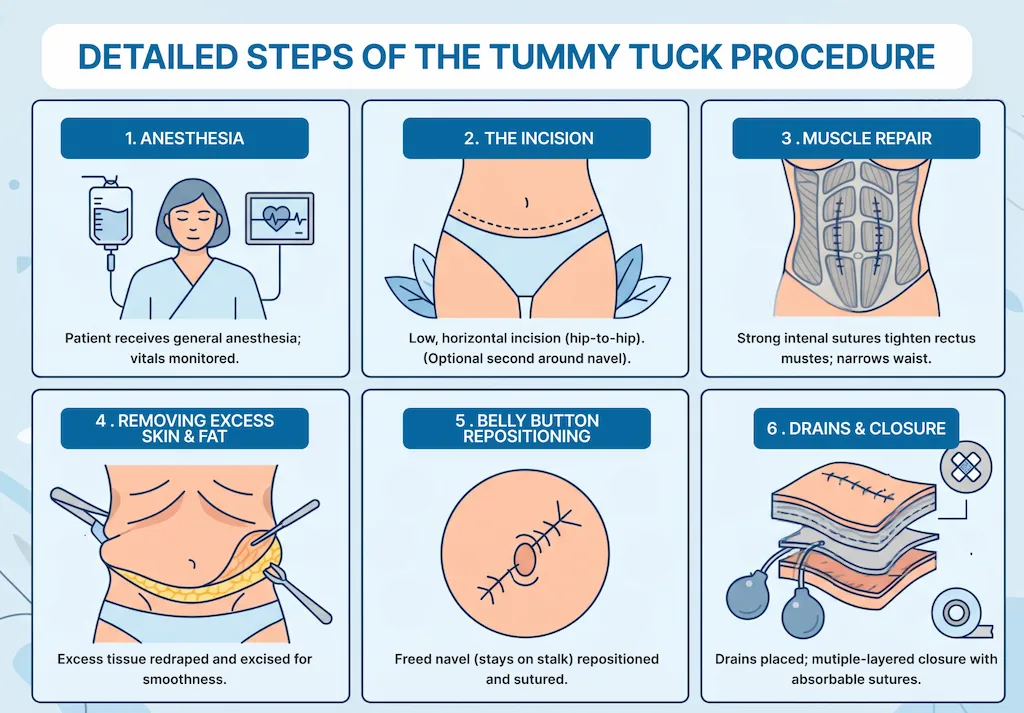
This is the core of how a tummy tuck is performed. Most patients are curious about what actually happens in the operating room, so here's a step-by-step walkthrough.
Step 1: Anesthesia
A tummy tuck is performed under general anesthesia, which means you'll be completely asleep throughout the procedure. General anesthesia is the standard for abdominoplasty because the surgery involves extensive tissue dissection and muscle work. An anesthesiologist monitors your vitals and comfort from start to finish.
Step 2: Liposuction
Once you're comfortably under anesthesia, Dr. Sistare often begins with liposuction to refine fat distribution along the flanks, lower back, or upper abdomen before any incisions are made. Removing this excess fat first allows the remaining tissue to lay more smoothly when the abdominal contour is reshaped later in the procedure.
Liposuction isn't required for every tummy tuck, but when it's part of your plan, performing it at the start creates a cleaner foundation for the rest of the procedure and helps refine your final result.
Step 3: The incision
Dr. Sistare makes a low, horizontal incision that runs from hip to hip along the suprapubic crease. The exact length depends on how much skin needs to be removed. He carefully places this incision so that it's easily concealed by underwear or swimwear.
For a full tummy tuck, a second incision is made around the belly button. This allows the navel to be freed from surrounding tissue before the abdominal flap is lifted. Mini tummy tucks use a shorter incision and typically don't require a periumbilical cut.
Step 4: Skin excision
With the incision made, your surgeon lifts the abdominal skin and underlying fat away from the muscle layer, creating a flap. You flex slightly on the operating table so the team can mark how much tissue should be removed, and the excess skin and fat are then trimmed away to leave a tighter, smoother contour.
How much tissue is removed varies patient to patient and depends on the technique chosen. Excising the skin at this stage gives Dr. Sistare a clear view of the abdominal wall before the muscle repair begins.
Step 5: Muscle repair
Once the skin and fat have been excised, your surgeon addresses the underlying muscles. In patients with diastasis recti, the rectus muscles are brought back together using strong internal sutures placed from the ribcage down to the pubic area. This tightening narrows the waistline and creates a firmer abdominal wall.
Not every patient needs muscle repair. If your muscle structure is intact, this step may be modified or skipped.
Step 6: Incision closure and belly button
Once the muscle repair is complete, the incision is closed in multiple layers using absorbable internal sutures and skin adhesive or surgical tape on the surface. Layered closure reduces tension on the scar and promotes smoother healing.
In a full abdominoplasty, the belly button is repositioned at this stage. The navel stays attached to its stalk while the surrounding skin is pulled down past it, and your surgeon creates a new opening in the repositioned skin to suture the navel into its natural position. The goal is a belly button that looks completely natural, as if surgery never happened. This step isn't needed for mini tummy tucks, since the lower-abdomen focus doesn't affect the navel area.
The entire procedure takes roughly 3 to 5 hours, depending on the type of tummy tuck and whether additional procedures like liposuction are included.
Lori shared their experience:
"Dr. Sistare is amazing, he explains everything perfectly and makes you feel comfortable. He really cares about his patients. The staff is amazing right along with the Surgical center. I have nothing but good things to say about my entire experience. Highly recommend Dr. Sistare!"
What does recovery look like after a tummy tuck?
Recovery is a gradual process, and understanding the timeline helps you plan ahead and set realistic expectations.
The first week
Expect mild to moderate swelling, bruising, and soreness. Your surgical team will prescribe pain medication to keep you comfortable. Short walks around the house are encouraged from day one to promote circulation and reduce the risk of blood clots.
You'll wear a compression garment continuously during this time to support healing and minimize swelling. Sponge baths are recommended for the first several days. Sleeping in a slightly reclined position with your knees bent helps reduce tension on the incision.
Follow-up appointments
Dr. Sistare schedules follow-up visits during the first few weeks to monitor your healing, check your incision, and answer questions as they come up. Because his technique typically doesn't require drains, there's no drain care to manage at home.
Returning to work and normal activities
Most patients can return to desk work within one to two weeks. Physically demanding jobs may require three to four weeks off. You can usually resume driving once you're off prescription pain medication, which is often within the first two weeks.
Exercise and physical activity
Light walking is encouraged early, but strenuous exercise should wait until four to six weeks after surgery with your surgeon's approval. This includes weightlifting, running, and core workouts.
Scars and final results
Your incision scar will be most visible in the first few months but continues to fade over a full year. A clinical evaluation of 310 abdominoplasty patients found that scars remain stable in position and improve significantly with time. Final results are typically visible around the three-month mark as swelling fully resolves.
| Recovery Stage | What to Expect | Activity Guidelines |
| Days 1 to 3 | Moderate swelling, bruising, and soreness; drain management begins; sponge baths only | Rest at home; short walks around the house encouraged from day one to promote circulation |
| Days 3 to 7 | Drains typically removed once output drops below 30ml per day; first follow-up appointment | Continue short walks; sleep in a reclined position with knees bent to reduce incision tension |
| Weeks 1 to 2 | Swelling begins to reduce; compression garment worn continuously; discomfort easing | Most patients return to desk work; driving permitted once off prescription pain medication |
| Weeks 2 to 4 | Energy returning; visible improvement in comfort and mobility | Light daily tasks only; no lifting, strenuous movement, or core exercises |
| Weeks 4 to 6 | Continued improvement in contour; compression garment still recommended | Cleared for most normal activities with surgeon approval |
| Week 6 onwards | Most restrictions lifted; scar beginning to soften and fade | Return to exercise, including weightlifting, running, and core workouts, with surgeon clearance |
| Months 3 to 6 | Swelling largely resolved; contour becomes more defined; scar continues to lighten | Full activity; clinical research on 310 abdominoplasty patients confirms scars improve significantly over time |
| Months 6 to 12 | Final results visible; scar fading significantly | No restrictions; maintain stable weight to protect long-term results |
What risks come with a tummy tuck and what results can I expect?
Like any surgery, a tummy tuck carries risks. Understanding them helps you make an informed choice and take steps to minimize potential complications.
Common complications
The overall complication rate for abdominoplasty is relatively low. A 2024 analysis of 55,596 procedures found an overall rate of 2.1%. The most common complications include seroma (fluid collection), infection, and hematoma (blood collection beneath the skin).
Risk factors that increase your likelihood of complications include a BMI above 30, diabetes, smoking, and having multiple procedures performed simultaneously. Choosing a board-certified cosmetic surgeon and carefully following pre- and post-operative instructions are two of the most effective ways to lower your risk.
How long do results last?
A tummy tuck delivers long-lasting results that can be considered permanent if you maintain a stable weight. Patients who keep their weight steady report high satisfaction years after surgery. One study of 188 patients found that tummy tuck recipients actually continued losing weight over the following five years.
Significant weight gain or future pregnancies can stretch the abdominal muscles and skin again, potentially undoing some of your results.
Will scars be visible long-term?
Scars are an inevitable part of any surgical procedure, but tummy tuck incisions are placed low enough to be hidden by most swimwear and underwear. A study of 147 patients found that 95% achieved good to excellent scar outcomes when assessed after a few months.
Proper care for the scar, including sun protection, can help your incision lines continue to fade over 12 months.
Alicia, puts her experience this way:
"I recently had exceptional experience at Palm Beach Cosmetic Surgery. The atmosphere was comforting and the staff was extremely professional. From the moment I walked in, I felt confident in their expertise. The consultation was thorough, and they took the time to understand my goals."
Conclusion
A tummy tuck is one of the most technically involved procedures in cosmetic surgery, and one of the most rewarding. It removes what exercise cannot, repairs what time has changed, and delivers results that hold up for years when paired with a stable weight and an active lifestyle. Understanding exactly how it works, from the first incision to the final follow-up, is what transforms a vague interest into a well-informed decision.
At Palm Beach Cosmetic Surgery, Dr. Sistare brings fellowship-trained expertise and a genuinely patient-first approach to every procedure. From your first consultation to your twelve-month results appointment, you'll have a team that knows you, answers your questions honestly, and is invested in your outcome from start to finish. We also offer financing options through Cherry, CareCredit, and Alphaeon Credit to make it work for you.
If you've been thinking about this procedure, the most useful next step isn't more research. It's a conversation with a surgeon who can look at your specific anatomy, listen to your goals, and tell you exactly what's possible.
Call 561-499-9000 or schedule your consultation today. Take the first step and we'll walk you through the rest.
Frequently asked questions about tummy tuck surgery
How long does a tummy tuck surgery take?
Most tummy tuck procedures take 3 to 5 hours, depending on the technique and whether additional procedures like liposuction are included.
Will I be asleep during the procedure?
Yes. Tummy tucks are performed under general anesthesia, so you'll be completely asleep and won't feel anything during surgery.
Do all tummy tucks require muscle repair?
No. Muscle repair is performed only when the underlying abdominal muscles are weakened or separated. Mini tummy tucks, for example, may not include this step.
How much does a tummy tuck cost on average?
The national average surgeon's fee is approximately $8,174, though total costs vary by location and technique. Locally in West Palm Beach, tummy tucks start from $11,399 with monthly payment options through Cherry, CareCredit, and Alphaeon Credit.
What's the difference between a tummy tuck and liposuction?
A tummy tuck removes excess skin and tightens muscles, while liposuction only removes fat through suction. Liposuction can't address loose skin or muscle separation.
When can I shower after surgery?
Most patients can shower approximately 48 to 72 hours after surgery, depending on their surgeon's instructions. Baths and swimming should be avoided until the incisions are fully healed.
Does insurance cover a tummy tuck?
Generally, no. Tummy tucks are considered cosmetic. However, insurance may cover a panniculectomy if excess skin causes documented medical issues like chronic rashes or infections.
How painful is tummy tuck recovery?
Most patients experience moderate discomfort during the first week, managed with prescribed pain medication. A compression garment also helps reduce swelling and tenderness. Pain typically decreases significantly by the second week.
Will a tummy tuck remove my stretch marks?
A tummy tuck can remove stretch marks located on the excess skin below the belly button that gets excised during surgery. Stretch marks on skin that remains will still be present afterward.
**Disclaimer: The information is intended for educational purposes only and should not be considered medical advice. Every patient's anatomy, health history, and goals are unique, and outcomes, recovery timelines, and candidacy may vary. The only way to determine whether the procedure is right for you is through a one-on-one consultation with a board-certified cosmetic surgeon. Always discuss your specific concerns, risks, and expectations with your provider before making any decisions about surgery. The specialty recognition identified herein has been received from a private organization not affiliated with or recognized by the Florida Board of Medicine."